
When GCs assemble their subcontractor lists for a commercial project, "glazing sub" appears on every one. But what that scope actually includes - and what distinguishes a competent commercial glazing subcontractor from a residential glass shop or a one-truck glazier - is often less clear than it should be. This guide answers both questions.
Glazing Subcontractor vs. Glass Shop vs. Glazier
These three terms are often used interchangeably, but they describe different things.
A glazier is a tradesperson - the individual craft worker who installs glass. Glaziers belong to the International Union of Painters and Allied Trades (IUPAT), which represents glaziers and glass workers. When you see a crew member on a lift installing curtainwall panels, that person is a glazier.
A glass shop typically refers to a small glazing company that fabricates or installs glass for residential and light commercial applications - storefront glass replacement, shower enclosures, mirrors, residential windows. Glass shops often serve individual building owners, property managers, and homeowners. They are rarely set up to manage commercial subcontract relationships, produce PE-stamped shop drawings, or coordinate with a GC's submittal process.
A glazing subcontractor - specifically a commercial glazing subcontractor - is a company that carries a subcontract from a general contractor, manages the full scope of commercial glass and aluminum work, and is accountable for everything from estimating through warranty. The company hires glaziers as field personnel, but also employs estimators, project managers, submittal coordinators, and field superintendents. The organizational infrastructure is what makes a glazing subcontractor different from a glass shop.
The distinction matters because GCs who hire a glass shop for a commercial project - or award glazing scope to a sub that lacks commercial project management capabilities - typically encounter the same problems: late submittals, wrong product approvals, failed inspections, change orders for scope the sub didn't properly account for, and a single point of contact who doesn't have a backup when they're on vacation.
What a Glazing Subcontractor Is Responsible For
On a commercial project, a glazing subcontractor's scope of responsibility extends well beyond showing up with a crew to install glass. The scope typically includes:
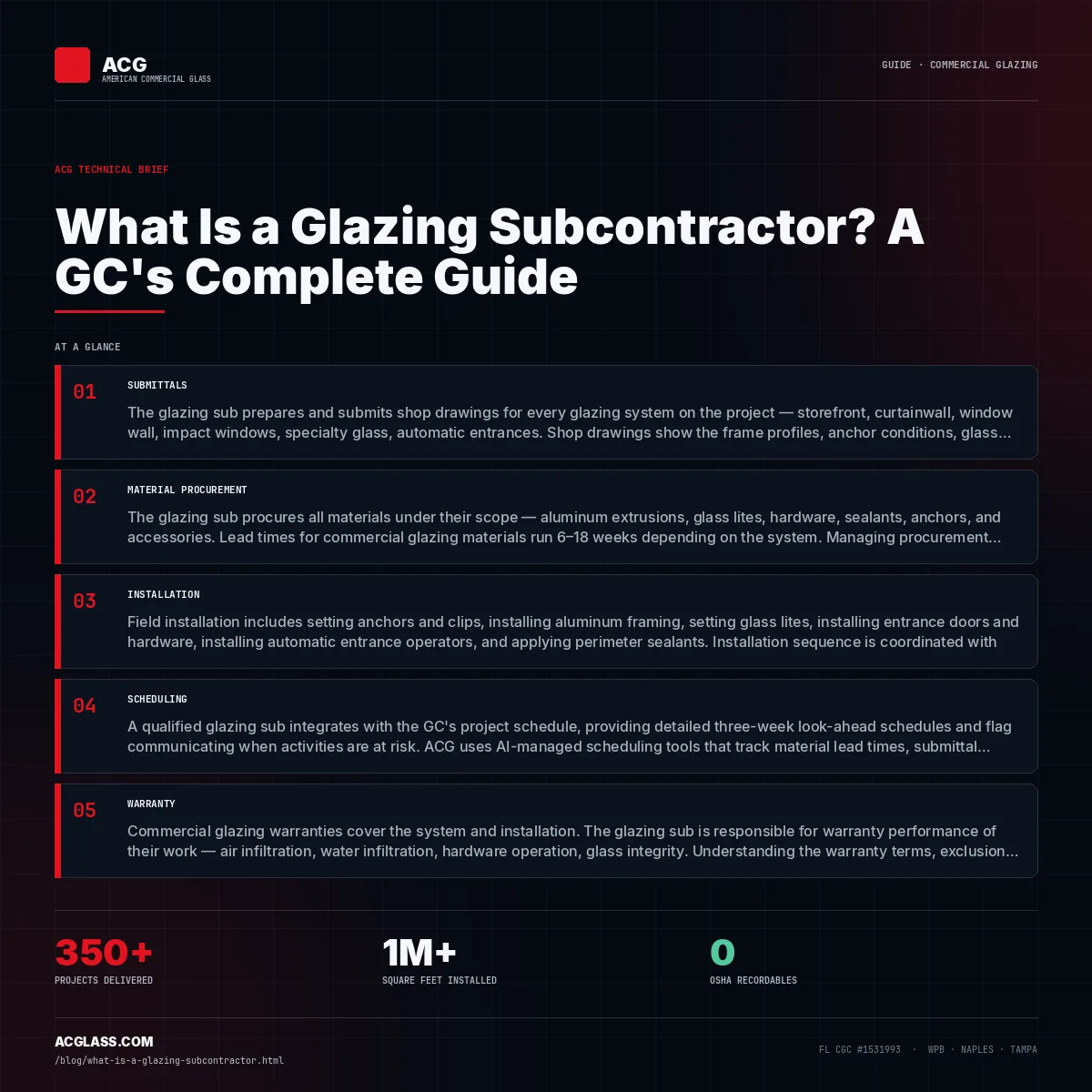
Submittals: The glazing sub prepares and submits shop drawings for every glazing system on the project - storefront, curtainwall, window wall, impact windows, specialty glass, automatic entrances. Shop drawings show the frame profiles, anchor conditions, glass specifications, and installation details. On Florida projects, submittals must include Florida Product Approval documentation for every exterior system. In Miami-Dade and Broward counties, Miami-Dade NOA documentation is required in addition to the state product approval.
Material procurement: The glazing sub procures all materials under their scope - aluminum extrusions, glass lites, hardware, sealants, anchors, and accessories. Lead times for commercial glazing materials run 6-18 weeks depending on the system. Managing procurement against the project schedule is one of the highest-risk functions a glazing sub performs. A late material order is the most common cause of glazing delays on commercial projects.
Installation: Field installation includes setting anchors and clips, installing aluminum framing, setting glass lites, installing entrance doors and hardware, installing automatic entrance operators, and applying perimeter sealants. Installation sequence is coordinated with the GC's master schedule and the work of adjacent trades - concrete, structural steel, waterproofing, EIFS, and interior finishes.
Scheduling: A qualified glazing sub integrates with the GC's project schedule, providing detailed three-week look-ahead schedules and flag communicating when activities are at risk. ACG uses scheduling tools that track material lead times, submittal approval status, crew deployment, and inspection requests in real time - which gives GC superintendents actual visibility into the glazing scope, not just a verbal update at the weekly OAC meeting.
Warranty: Commercial glazing warranties cover the system and installation. The glazing sub is responsible for warranty performance of their work - air infiltration, water infiltration, hardware operation, glass integrity. Understanding the warranty terms, exclusions, and response commitments is part of qualifying a glazing sub, not an afterthought.
Division 08: The Specification Standard for Glazing
In commercial construction, the CSI MasterFormat system organizes subcontract scope into numbered divisions. Division 08 is Openings - and it covers everything a glazing subcontractor installs: storefronts (Section 084113), curtainwall (Section 084400), window wall (Section 084300), specialty glazing (Section 088000), automatic entrances (Section 084213), fire-rated glass (Section 083400), and door hardware (Section 087000).
When a GC issues a bid for "Division 08" scope, they're asking a glazing sub to price everything in the Openings division - not just the glass. This is why understanding what a glazing subcontractor does matters: a GC who assumes Division 08 is handled by two or three different subs is creating coordination gaps that will generate RFIs, delays, and warranty disputes.
What Makes a Good Glazing Sub
Beyond licensure and insurance, the attributes that separate a strong commercial glazing subcontractor from a marginal one come down to five things:
Submittal speed and accuracy. Glazing submittals are on the critical path of most commercial projects. A sub that can produce a complete, PE-stamped submittal package within 10 business days of contract execution - and respond to RFIs same-day - keeps the schedule moving. A sub that takes six weeks to produce first submittals is already a problem before the first piece of aluminum arrives on site.
Florida code knowledge. In Florida, every exterior glazing product requires a Florida Product Approval. In HVHZ (Broward and Miami-Dade counties), a Miami-Dade NOA is also required. A glazing sub that doesn't have this documentation memorized - or who has to look up whether their standard systems are Florida PA-compliant - is not a regular commercial player in this state.
Material procurement management. Long lead times are a fact of commercial glazing. The difference between a glazing sub that causes delays and one that doesn't is whether they order material immediately after contract execution and track lead times proactively, or whether they wait for submittals to be approved before ordering and then discover the lead time is 16 weeks.
Communication discipline. GC superintendents need to know where glazing is in the schedule before it becomes an emergency. A glazing sub that communicates proactively - ahead of the weekly meeting, not at it - prevents surprises. ACG's operations mean that schedule status, material status, and inspection needs are tracked systematically rather than depending on whoever is managing the job that week.
Single-scope accountability. The best glazing subs cover the full Division 08 scope under a single subcontract. No split between a glazing sub and a hardware supplier. No separate contract for automatic entrances. One sub, one point of accountability, one warranty - for every opening on the building.
Red Flags When Hiring a Glazing Sub
Watch for these during the qualification and bid process:
Inability to name specific Florida Product Approval numbers for their standard systems. Inability to explain their submittal process and typical first-submittal timeline. Vague answers about material lead times for the systems they're proposing. No dedicated project manager - just the estimator who wins the job and a field foreman. References that are all residential or residential-adjacent projects. Proposals with large "allowances" for systems that should have firm pricing.
ACG: A Commercial Glazing Subcontractor Built for GCs
American Commercial Glass has operated as a commercial glazing subcontractor in Florida for 5+ years, delivering commercial projects for general contractors across the state. We cover the full Division 08 scope - storefront, curtainwall, window wall, impact systems, fire-rated glass, automatic entrances, and hardware - under a single subcontract: West Palm Beach, Naples, and Tampa.
Our operations are: material procurement, submittal tracking, crew scheduling, and inspection coordination are tracked in real time against the GC's master schedule. Our standard commitment is a 48-hour scope turnaround from plan receipt - which means you can close your glazing budget without waiting a week for a proposal.
If you're building in Florida and need a glazing sub that operates like a professional commercial contractor - not a glass shop that occasionally takes commercial work - send us your plans.