
Commercial glass replacement in Florida is not a simple swap. The state's wind-borne debris requirements, product approval system, and the 25% upgrade rule mean that replacing glazing on a commercial building - whether after storm damage, for energy efficiency reasons, or as part of a renovation - involves code compliance questions that the wrong contractor won't even know to ask.
When Commercial Glass Needs Replacement
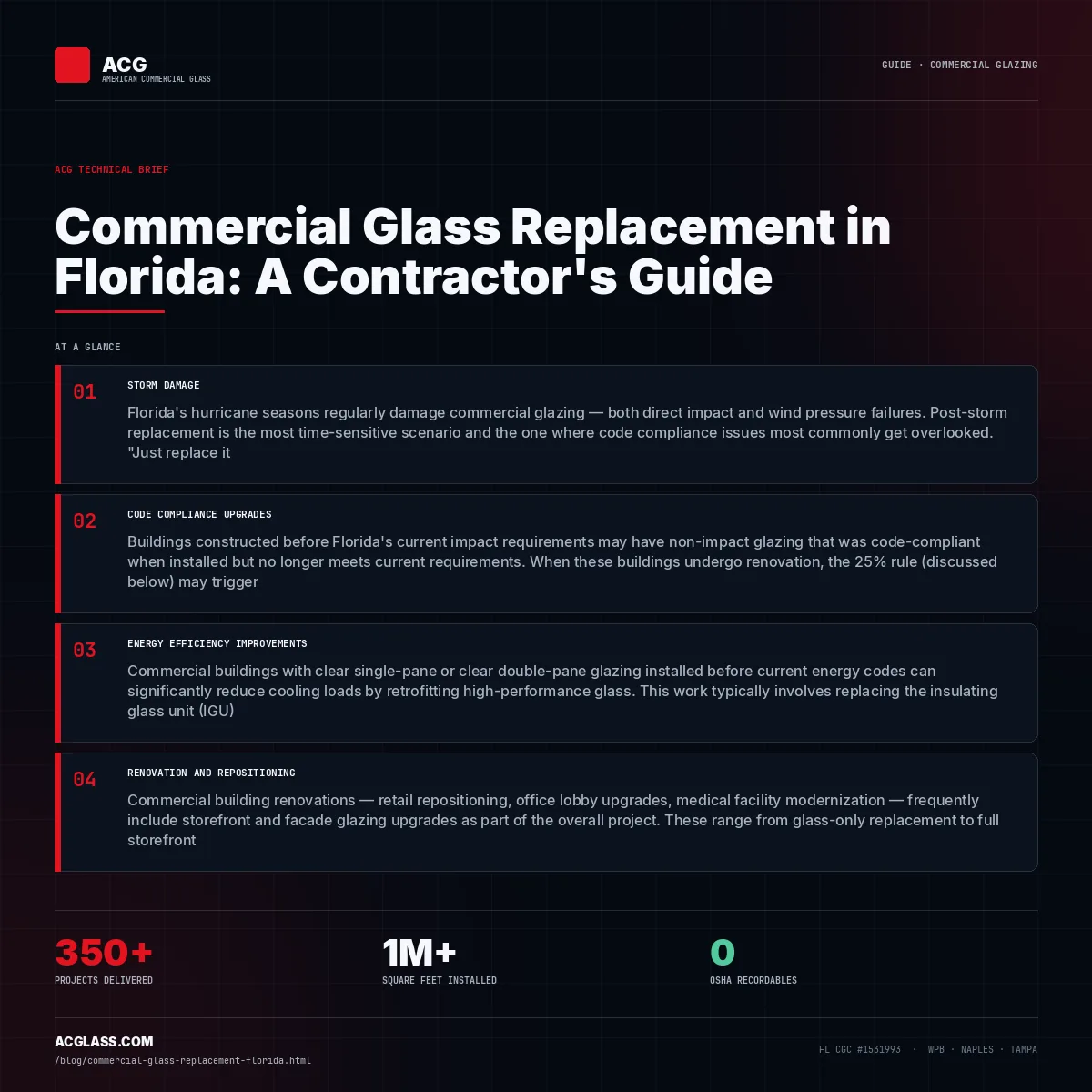
The four most common scenarios that bring GCs and building owners to ACG for commercial glass replacement:
Storm damage: Florida's hurricane seasons regularly damage commercial glazing - both direct impact and wind pressure failures. Post-storm replacement is the most time-sensitive scenario and the one where code compliance issues most commonly get overlooked. "Just replace it with what was there" is often not the right approach, and sometimes isn't even legally permissible.
Code compliance upgrades: Buildings constructed before Florida's current impact requirements may have non-impact glazing that was code-compliant when installed but no longer meets current requirements. When these buildings undergo renovation, the 25% rule (discussed below) may trigger a requirement to upgrade the glazing to current standards. For building owners, this is an opportunity to address a long-standing vulnerability; for GCs, it's a scope addition that needs to be identified at bidding.
Energy efficiency improvements: Commercial buildings with clear single-pane or clear double-pane glazing installed before current energy codes can significantly reduce cooling loads by retrofitting high-performance glass. This work typically involves replacing the insulating glass unit (IGU) within existing frames (a "glass retrofit") or replacing the full storefront or window system.
Renovation and repositioning: Commercial building renovations - retail repositioning, office lobby upgrades, medical facility modernization - frequently include storefront and facade glazing upgrades as part of the overall project. These range from glass-only replacement to full storefront demolition and new system installation.
Replacement vs. Retrofit: The Technical Difference
These two terms are often used interchangeably but they mean different things technically:
Glass replacement refers to removing the glass from existing frames and installing new glass of the same or similar configuration in those frames. The frame system stays in place; only the glass changes. This is appropriate when the existing frame system is structurally sound, meets current code requirements, and the glass failure is isolated. For insulating glass unit failures (seal failure, fogging), glass replacement within intact frames is often the right approach.
Retrofit refers to a more comprehensive intervention - typically removing and replacing both the glass and the frame system, or installing a new system over or within the existing building envelope. Retrofits are appropriate when the existing frame system no longer meets current performance standards, when the building is changing occupancy or use in ways that change the glazing requirements, or when the existing system's structural capacity is insufficient for current wind load requirements.
For a GC budgeting commercial glazing work on an existing building, the distinction matters because retrofits are substantially more expensive than glass replacement. Understanding what's actually needed - glass only, or glass and frame - before pricing is essential to avoiding change orders.
Florida Code Compliance for Replacement Glass
Florida Building Code's provisions for existing buildings (Chapter 34) establish that replacement work must comply with current code requirements - not the code that was in effect when the building was constructed. This is the rule that surprises building owners and contractors who assume "like for like" replacement is always permissible.
The specific rule that most often applies to commercial glazing replacement is the 25% rule: if the total area of replacement glazing in any 12-month period exceeds 25% of the building's exterior glazing area, the replacement work must bring the entire replacement scope into compliance with current Florida Building Code. In practice, this means any significant commercial glazing replacement in Florida's wind-borne debris regions requires impact-rated products with current Florida product approval.
For individual broken panes following storm damage, emergency repair provisions may allow temporary or provisional repair before full permit processing. But a storefront system replacement, a window replacement program, or a renovation-driven glazing scope generally requires current code compliance - not a match to the original specification.
The practical implication: when ACG prices a replacement scope, we verify the applicable requirements for the specific project and location. The GC needs to know this before the contract is signed.
Product Approval Requirements for Replacement Glass
Florida Building Code requires that all glazing products installed in Florida commercial buildings carry Florida product approval (issued by the Florida Department of Business and Professional Regulation) or, in the HVHZ, Miami-Dade NOA. This requirement applies to replacement products, not just new construction.
Product approval is issued for a specific product configuration - a specific glass type, thickness, and temper, in a specific frame system, with specific anchorage details, tested at specific performance levels. Replacing the glass in an existing frame with a different product requires verifying that the new glass configuration is within the approved parameters for that frame system.
This is where residential glass companies typically fail on commercial replacement work. They may carry standard float glass or tempered glass in their inventory. That glass may not have Florida product approval for the specific frame configuration in the building. Replacing commercial glazing with products that don't carry applicable product approvals is a code violation that may not surface until the building changes hands, undergoes insurance inspection, or applies for a permit for future work.
Insurance Documentation and Claims
When commercial glass replacement is insurance-related - storm damage, vandalism, or other insured events - the documentation requirements add a layer to the project. Insurance adjusters need repair or replacement cost documentation, scope of damage documentation, and in some cases documentation that the proposed replacement scope is code-compliant.
ACG works on insurance-related glazing replacement scopes and understands the documentation requirements. This includes providing the adjuster with itemized scope documentation (not just a lump sum) that supports the insurance claim, confirming what products are eligible under the policy's specifications, and managing the timeline between insurance approval and actual replacement (which affects whether temporary protection is needed).
Post-storm, the window between storm damage and the next weather event is often short in Florida. ACG prioritizes rapid assessment and temporary protection - boarding or temporary barriers - while the permanent replacement scope is documented and priced.
The Westlake Hialeah Retrofit: An Example
ACG's retrofit work at the Westlake development in Hialeah illustrates the range of what commercial glazing replacement involves. The project required removing existing storefront systems that predated current HVHZ impact requirements and installing new systems with Miami-Dade NOA approval. The work was performed on an occupied building with sequenced installation to maintain building enclosure and tenant access throughout the replacement program. The submittal package included documentation of existing conditions, the proposed NOA-compliant replacement systems, the installation sequence, and the testing documentation required for the insurance carrier's record.
The technical and logistical complexity of that project - occupied building, HVHZ compliance, insurance documentation, phased installation - is representative of what commercial glass replacement in Florida actually involves when it's done correctly. It is not a job for a residential glass company.