
Glazing costs are one of the most misunderstood line items in a Florida commercial budget. GCs frequently use rules of thumb that don't account for system type, HVHZ requirements, or the wide range of glass and finish specifications that can push costs dramatically. Here are real ranges - with the context to make sense of them.
Cost Ranges by System Type
All ranges below are installed cost in Florida in 2026 - supply, fabrication, and installation combined. They assume standard commercial project conditions: adequate staging, reasonable schedule, and typical access. Extremes outside these ranges exist for highly specialized projects.
| System | Range (installed $/SF) | Notes |
|---|---|---|
| Commercial Storefront | By scope | Non-HVHZ low end; HVHZ impact-rated high end |
| Window Wall | By scope | Stick-built low; unitized mid-to-high end |
| Curtainwall | By scope | High-performance, multi-story, engineered anchor systems |
| Impact Windows (commercial units) | By scope | Per square foot of window unit, not rough opening |
What Drives Cost Within Each Range
Glass Specification
Glass is typically the single largest material cost in a glazing scope. Clear 1" insulated glass (two lites of annealed glass with an air space) is the baseline. Add-ons that move cost upward include:
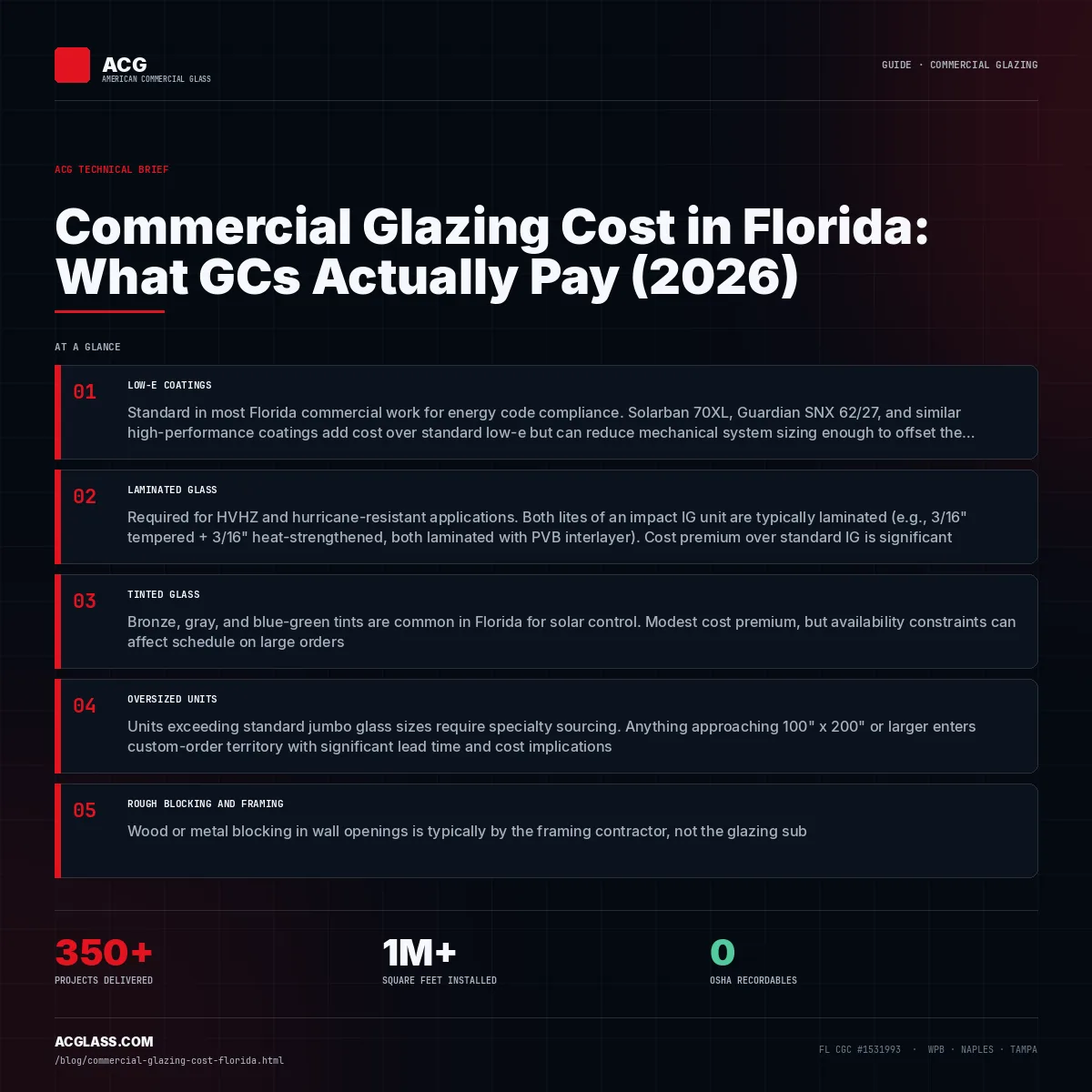
- Low-e coatings: Standard in most Florida commercial work for energy code compliance. Solarban 70XL, Guardian SNX 62/27, and similar high-performance coatings add cost over standard low-e but can reduce mechanical system sizing enough to offset the premium.
- Laminated glass: Required for HVHZ and hurricane-resistant applications. Both lites of an impact IG unit are typically laminated (e.g., 3/16" tempered + 3/16" heat-strengthened, both laminated with PVB interlayer). Cost premium over standard IG is significant.
- Tinted glass: Bronze, gray, and blue-green tints are common in Florida for solar control. Modest cost premium, but availability constraints can affect schedule on large orders.
- Oversized units: Units exceeding standard jumbo glass sizes require specialty sourcing. Anything approaching 100" x 200" or larger enters custom-order territory with significant lead time and cost implications.
Frame Finish
Aluminum framing is finished in one of three ways: mill finish (raw aluminum, unpainted), anodized (electrochemically treated, typically Class I or Class II anodize in clear, dark bronze, or black), or painted/powder-coated (spray or electrostatic applied, unlimited color options with Kynar 500 or equivalent). Mill finish is lowest cost and unsuitable for most exposed commercial applications. Anodized finishes are standard for most commercial work. Painted/powder-coated finishes add cost and require a primer coat on coastal Florida projects to resist the salt air environment.
HVHZ vs. Non-HVHZ
HVHZ-compliant systems cost more across the board. The cost premium comes from: heavier framing sections required to pass TAS testing, laminated glass required in place of standard annealed glass, increased anchor requirements, additional documentation and inspection costs, and a smaller competitive pool of NOA-approved products. comparable non-HVHZ scopes depending on the system type.
Access Difficulty
Access conditions - crane availability, interior installation vs. exterior, multiple floors vs. ground level, occupied building conditions - significantly affect labor cost. A ground-floor retail storefront with staging room is fastest and lowest-priced to install.
Project Scale
Glazing subs price large repetitive packages more competitively than small unique scopes. A 200-unit window wall on a multifamily tower produces material volume discounts and efficient labor pacing. A 20-opening storefront scope on a small medical office building doesn't generate the same efficiencies. Expect per-SF costs to be meaningfully higher on small or fragmented scopes.
What's Typically Excluded from a Glazing Bid
Understanding what a glazing bid doesn't include is as important as understanding what it does. Standard glazing subcontract exclusions in Florida typically include:
- Rough blocking and framing: Wood or metal blocking in wall openings is typically by the framing contractor, not the glazing sub.
- Concrete sill work: Poured concrete sills or raised curbs at storefront sill conditions are typically by the masonry or concrete contractor.
- Building waterproofing interface: The glazing sub seals the perimeter of their system, but the broader building waterproofing and flashing system (wrap, self-adhered membrane, fluid-applied barriers) is typically by the envelope contractor or GC-furnished.
- Structural steel headers: Structural steel above large openings is structural work, not glazing work.
- Electrical for automated doors: Power for automatic door operators is typically by the electrical sub, with the glazing sub furnishing the operator and hardware only.
Mismatches in these scope boundaries are a common source of gaps and overlaps at buyout. When leveling glazing bids, confirm exactly where each sub draws the line on these items.
How to Evaluate a Glazing Bid - Beyond $/SF
The unit cost per square foot is the starting point, not the whole picture. Before awarding a glazing scope, evaluate:
- Submittal quality commitment: Does the bid include a shop drawing schedule? What's the promised turnaround? Glazing submittals - especially for curtainwall or HVHZ projects - can take 60-90 days to get approved through multiple plan review cycles. A sub who hasn't planned for this will delay your schedule.
- Product approval coverage: Is the specific product proposed actually approved for the project's wind zone? Has the sub confirmed configuration coverage within the NOA or FL PA?
- Warranty: What does the system warranty cover, and for how long? Most commercial aluminum framing carries a 10-year manufacturer's warranty against defects; glass typically carries 5 years against seal failure. Labor warranty varies significantly by contractor.
- References on comparable scopes: Has this sub actually installed this system type at this scale in Florida's climate? Ask for three recent comparable projects with contact names.
ACG's 48-Hour Scope Turnaround
American Commercial Glass provides detailed scope letters, system recommendations, and pricing within 48 hours of receiving plans for most commercial projects. Our pricing reflects real Florida market conditions - not national averages inflated or deflated by factors that don't apply to your project. If you're in buyout and need a competitive, documentable glazing number fast, send us your plans and we'll have something back to you the next business day.