
Glazing bids are not apples-to-apples. Two quotes for the same project can differ by 30% and both be technically responsive to the drawings - because each sub made different assumptions about glass spec, hardware, product approvals, and scope boundaries. The scope letter is where you find out what you're actually buying. Here's how to read one.
What a Complete Glazing Scope Includes
A complete glazing subcontract scope covers the full supply-and-install package for the glazing system. Every element below should be explicitly addressed in the scope letter - either included, excluded, or covered by an explicit allowance:
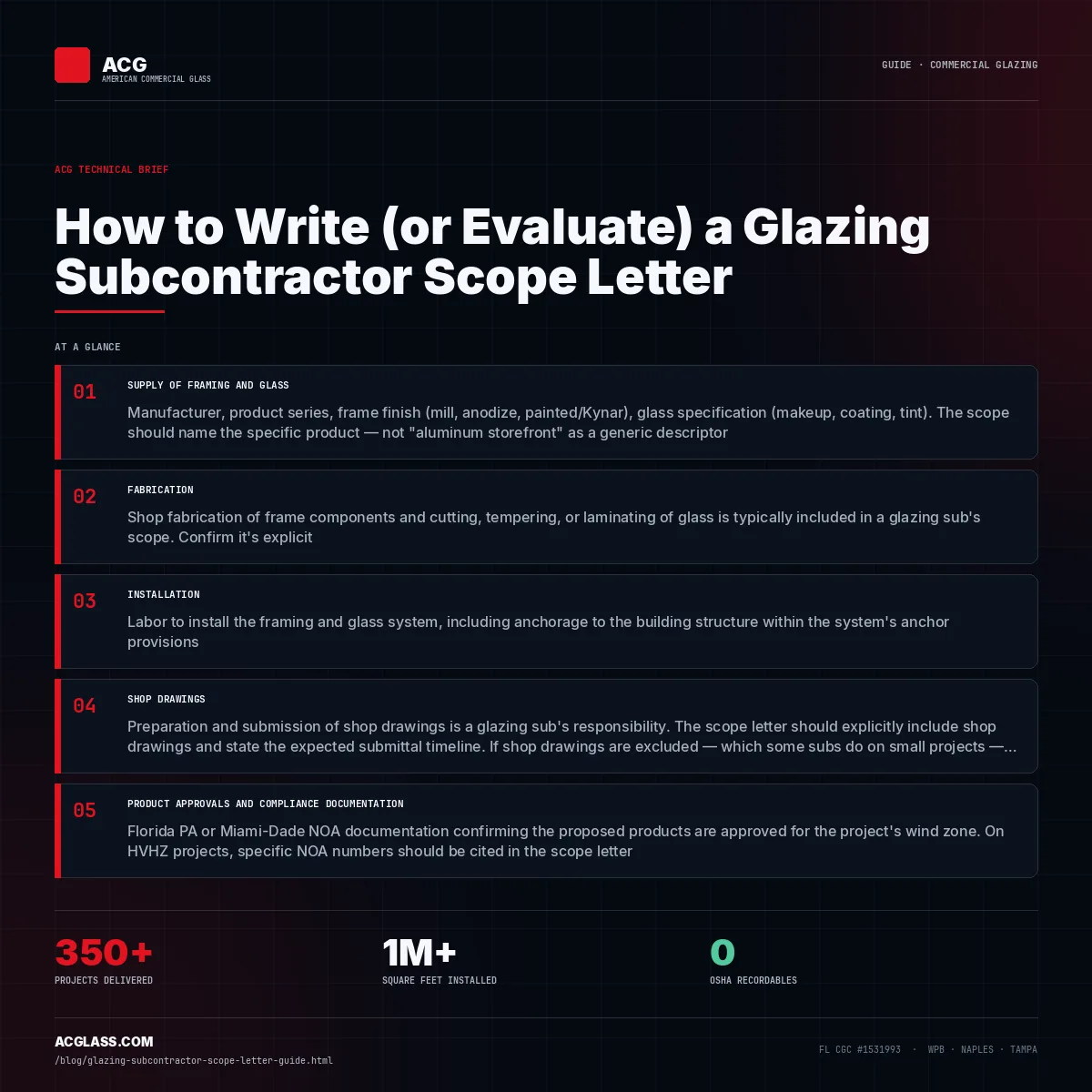
- Supply of framing and glass: Manufacturer, product series, frame finish (mill, anodize, painted/Kynar), glass specification (makeup, coating, tint). The scope should name the specific product - not "aluminum storefront" as a generic descriptor.
- Fabrication: Shop fabrication of frame components and cutting, tempering, or laminating of glass is typically included in a glazing sub's scope. Confirm it's explicit.
- Installation: Labor to install the framing and glass system, including anchorage to the building structure within the system's anchor provisions.
- Shop drawings: Preparation and submission of shop drawings is a glazing sub's responsibility. The scope letter should explicitly include shop drawings and state the expected submittal timeline. If shop drawings are excluded - which some subs do on small projects - that's a significant scope gap.
- Product approvals and compliance documentation: Florida PA or Miami-Dade NOA documentation confirming the proposed products are approved for the project's wind zone. On HVHZ projects, specific NOA numbers should be cited in the scope letter.
- Testing and inspection reports: Any field testing required by the specifications (e.g., ASTM E1105 water infiltration testing, air infiltration testing) and documentation for permit inspections should be explicitly included.
- Hardware: Door hardware - hinges, closers, locksets, panic devices, pulls, thresholds, and weatherstripping - should be specifically addressed. This is one of the most common scope ambiguities in glazing bids.
- Anchors and attachments: The glazing sub's scope typically includes the anchor system integral to their product - head clips, sill anchors, jamb anchors as specified by the manufacturer. Structural steel embedments, cast-in plates, or supplemental framing by others should be explicitly noted as exclusions.
- Perimeter sealant: Caulking at the perimeter of the glazing system - the joint between the frame and adjacent structure - is usually included in the glazing scope. Confirm this explicitly; some subs stop at the frame and call the perimeter sealant an "adjacent trade" item.
Standard Inclusions vs. Exclusions
Standard inclusions in a well-written glazing scope: all of the above items in the complete scope checklist, plus glass replacement warranty (typically 1-5 years against seal failure depending on manufacturer), workmanship warranty (typically 1-2 years on installation labor), and cleanup of glazing debris and packaging material from the glazing work area.
Standard exclusions that are legitimately outside a glazing sub's scope include: rough framing and backing in wall openings (carpentry/framing contractor), concrete sill work and raised sill curbs (masonry or concrete contractor), structural steel headers and lintels above large openings (structural steel), building waterproofing and moisture barrier systems beyond the glazing system's perimeter sealant (envelope contractor or GC), electrical rough-in for automatic door power (electrical sub), and general hoisting beyond the glazing sub's own rigging equipment.
These exclusions are legitimate when they're clearly stated and when the GC has confirmed another trade is covering them. Problems arise when the glazing scope excludes items that aren't in any other listed trade's scope - creating a gap the GC holds without having priced it.
Red Flags in Scope Letters
"Glass Allowance" Without Definition
A scope letter that prices the framing but includes a vague "glass allowance" is an open-ended liability. "Glass allowance: $X per SF" without specifying glass makeup, coating, tint, thickness, and manufacturer gives the sub the ability to supply whatever glass meets the allowance budget - which may not match the specification. Require that glass be fully specified by manufacturer and product in the scope letter, not covered by an open allowance.
No Mention of Product Approvals
A scope letter for Florida work that doesn't reference product approvals - FL PA or NOA numbers for the proposed systems - is from a sub who either hasn't verified compliance or doesn't think it's their responsibility. Both are problems. On HVHZ projects, this is disqualifying. On non-HVHZ projects, it still means the proposed product hasn't been checked against the wind zone requirements for the specific location.
Vague Hardware Provisions
"Door hardware by others" is acceptable if you've confirmed who "others" is. "Hardware per plans" without a hardware schedule or explicit hardware allowance creates uncertainty about whether the closer, lockset, and panic hardware are priced. On commercial projects with specified hardware from an Owner-furnished hardware schedule, the glazing sub's scope typically includes furnishing and installing the hardware; on projects without a hardware schedule, the glazing sub should provide a specific hardware specification and budget.
Missing Shop Drawing Requirement
A scope letter that doesn't mention shop drawings is a yellow flag. Florida commercial projects require approved shop drawings before installation can begin. If a glazing sub doesn't address submittals in their scope letter, ask directly: are shop drawings included, when will they be submitted, and who's doing the PE review if required? The answer tells you a lot about how organized this sub is and whether they've actually priced the complete scope of work.
"Per Plans and Specs" Without Qualification
A scope letter that consists largely of "furnish and install glazing per plans and specifications" with no further detail is not a scope letter - it's a placeholder that leaves every ambiguity unresolved. A real scope letter resolves the ambiguities: what product, what finish, what glass, what hardware, what's in and what's out at the scope boundaries.
How to Use Scope Letters to Compare Bids Apples-to-Apples
When you have multiple glazing bids, read the scope letters against each other and against the specification before comparing prices. Build a scope leveling matrix with the items above as rows and the competing subs as columns. Note which items are included, excluded, or ambiguous for each sub. Then:
- Add back costs for items one sub excludes that another includes, so you're comparing true total costs.
- Flag items that are ambiguous in one bid and ask for clarification before award - not after.
- Confirm that the proposed products are actually equal - a lower price can reflect a lower-priced glass specification, a lower-end product, or missing hardware, not just a lower margin.
- Verify product approval coverage for the project's location in every bid, not just the one you're inclined to award.
What ACG's Scope Letters Include
American Commercial Glass scope letters explicitly identify: the manufacturer and product series for every system type, frame finish, full glass specification (makeup, coatings, tint, and thickness), FL PA or NOA numbers for each proposed system, hardware make and model for each door type, shop drawing schedule with first-submission target date, PE review commitment for systems requiring stamped calculations, perimeter sealant inclusion, and explicit statement of standard exclusions. Our scopes are written to be leveled - every ambiguity resolved before you sign the subcontract.
If you want to see what a complete glazing scope looks like before you've put a project out to bid, reach out to us. We'll walk through the scope boundaries with you and flag anything the drawings leave undefined. Our standard turnaround is 48 hours from receipt of plans to scope and pricing. Visit our services page to see the full range of glazing systems we install across Florida.
FAQ
What should a glazing scope letter include?
A complete glazing scope letter should explicitly include: specific product identification (manufacturer, series, finish, glass spec); product approval documentation (FL PA or NOA numbers); shop drawing and submittal commitment with timeline; hardware schedule or allowances by door type; anchor and attachment scope definition; perimeter sealant scope; testing and inspection requirements; and warranty terms for materials and labor. Any item not explicitly addressed in a scope letter is ambiguous - and ambiguity becomes a dispute when the scope gap surfaces in the field.
What are common glazing subcontractor exclusions?
Standard glazing sub exclusions include: rough blocking and backing in wall openings (framing contractor); concrete sill work (masonry or concrete); structural steel headers and lintels (structural steel sub); building waterproofing and moisture barriers beyond the glazing perimeter sealant (envelope contractor); electrical rough-in for automatic door operators (electrical sub); and general hoisting beyond the sub's own rigging. These are legitimate exclusions when clearly stated - the problem arises when excluded items fall into gaps not covered by any other trade's scope.