
The most common scheduling error GCs make with glazing is underestimating the lead time. Glazing is not like drywall - you can't accelerate it by adding more crews once glass units are in fabrication. Understanding the full timeline from award to closeout lets you schedule realistically and avoid the costly consequences of compressing a process that can't be compressed.
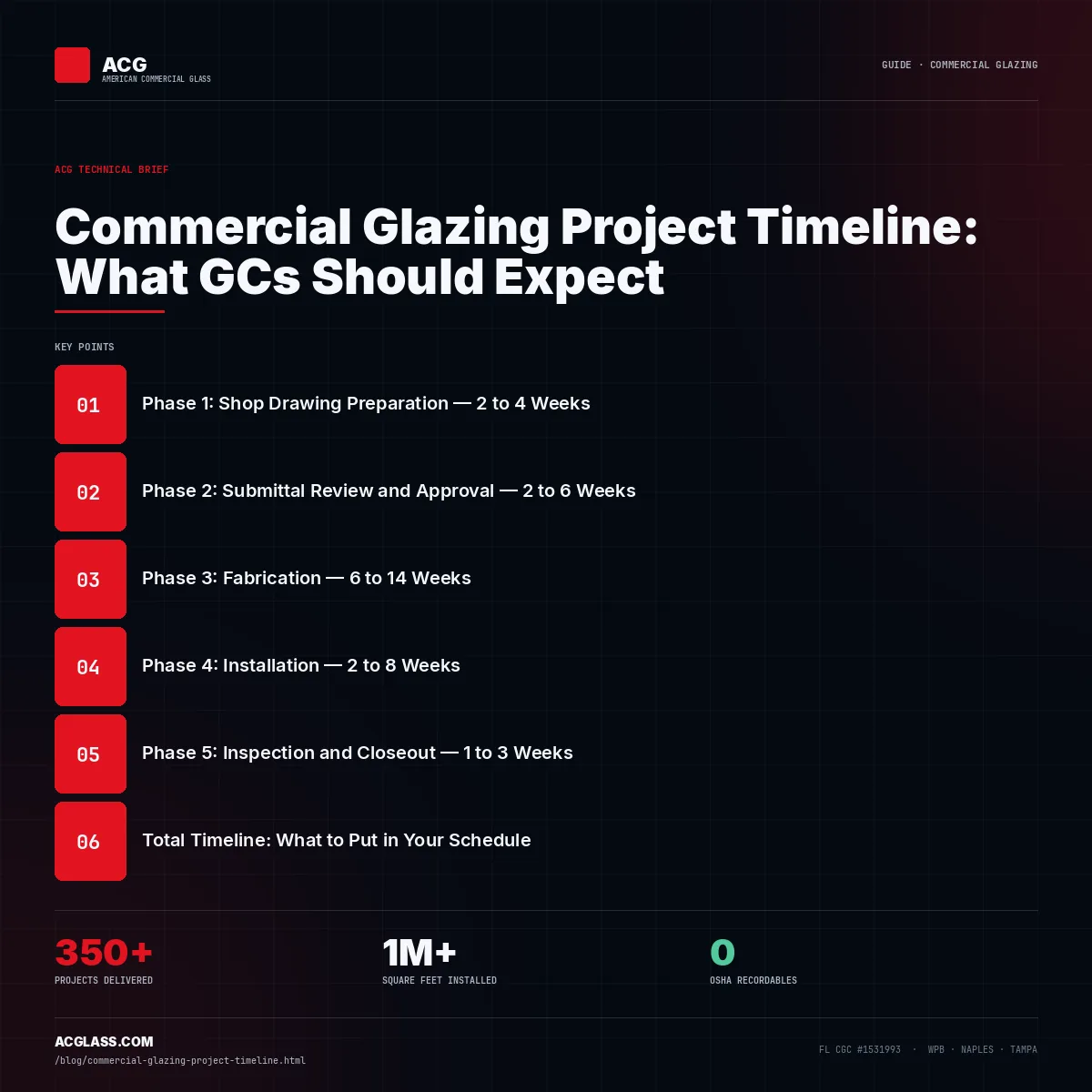
Phase 1: Shop Drawing Preparation - 2 to 4 Weeks
After subcontract execution, the glazing sub's first deliverable is a shop drawing package. For storefront on a straightforward commercial building, a competent sub can produce drawings in 2 weeks. For curtainwall with complex anchor conditions, PE-stamped structural calculations, or multiple system types, budget 4 weeks for initial submittal.
What slows this phase: incomplete drawing sets at bid, late design changes incorporated at subcontract, or a glazing sub who is overextended and not staffed for prompt submittal production. Ask your sub directly at subcontract execution: when will submittals be released? Put a date in the subcontract.
ACG's project workflow triggers the shop drawing process on the day of subcontract execution, with a target of first submittal within 10 business days on standard storefront scopes and 20 business days on curtainwall. This is tracked and flagged automatically if it slips.
Phase 2: Submittal Review and Approval - 2 to 6 Weeks
Once submitted, shop drawings go through the architect's review process. The contract typically allows the architect 14 days for review. In practice, review cycles on glazing submittals frequently take 3-4 weeks when comments and resubmittals are included. Complex curtainwall on high-rise buildings can take 6+ weeks through multiple comment-response cycles.
After architect approval, the building department may require their own review for permit issuance, adding additional time depending on the jurisdiction. Miami-Dade product approval submittals, if required, add their own review timeline outside the standard permit process.
GCs can help here: flag glazing submittals to your design team as a schedule-critical item and request expedited review. Some jurisdictions accept concurrent engineer-of-record review and building department review, which can compress the total approval timeline.
Phase 3: Fabrication - 6 to 14 Weeks
This is the phase that surprises GCs most. Custom glass units - insulated laminated units for impact-rated commercial applications - are fabricated to order. The fabrication lead time is driven by the glass plant's production queue, not by anything the GC or glazing sub can control once the order is released.
Typical fabrication lead times in the current Florida market:
- Standard commercial storefront glass (non-impact): 4-8 weeks from order release
- Impact-rated insulated laminated units: 8-12 weeks from order release
- Specialty glass (fritted, low-e coatings, large-format curtainwall units): 10-16 weeks from order release
Glass orders cannot be released until shop drawings are approved and field measurements confirmed. This is why the submittal phase is schedule-critical - every week of delay in approval translates directly to a week of schedule slip in fabrication completion and field installation.
The aluminum frame components (extrusions, hardware) typically fabricate faster than the glass - 4-8 weeks. The glass is the long-lead item and drives the schedule.
Phase 4: Installation - 2 to 8 Weeks
Installation duration depends on scope size, building access, and the number of openings. A typical range:
- Single-story retail storefront (5-10 openings): 1-2 weeks
- Multi-building commercial campus (50+ openings): 4-8 weeks
- Mid-rise curtainwall (3-8 stories): 6-12 weeks
What GCs can control during installation: scaffold and lift access, rough opening readiness (frames plumb, square, and at correct elevation before the glazing crew arrives), and coordination with other trades working in the same areas. Glazing installation is disrupted by drywall framing, MEP rough-in, and roofing crews working adjacent - sequence these carefully.
Phase 5: Inspection and Closeout - 1 to 3 Weeks
After installation, glazing inspection typically covers product approval documentation, anchor installation, and perimeter sealant. In HVHZ jurisdictions, inspectors verify NOA compliance at the installation level. Budget 1-2 weeks for inspection scheduling and any deficiency corrections.
Final cleaning and punchlist for glazing typically runs 3-5 days after inspection on a standard scope.
Total Timeline: What to Put in Your Schedule
For a standard Florida commercial glazing scope - impact storefront on a single-story commercial building - budget 20-26 weeks from subcontract award to installation complete. Curtainwall on a mid-rise building requires 28-40 weeks from award to closeout.
GCs who plan glazing on a 12-week schedule are planning for failure. If your overall project schedule compresses the glazing timeline below these ranges, the conversation to have is with the owner about early sub engagement - not with the glazing sub about accelerating glass fabrication.
How ACG Compresses Timelines
ACG's project workflow tracks every phase of the glazing process against the schedule in real time. Submittals are flagged if they haven't been released on schedule. Glass orders are placed the day approvals are received, not queued for the next weekly procurement meeting. Field teams are pre-mobilized based on fabrication tracking data so there's no delay between glass delivery and installation start.
On our projects, the combination of early submittal release and immediate glass order placement after approval consistently compresses the total schedule by 2-4 weeks compared to industry average. Reach out via our contact page or review our completed projects to see our track record on schedule performance.
FAQ
How long does commercial glazing installation take?
Installation alone ranges from 1-2 weeks for a single-story storefront to 6-12 weeks for a mid-rise curtainwall. But installation is only one phase - the full timeline from subcontract award to installation complete typically runs 20-36 weeks, driven primarily by submittal, approval, and glass fabrication lead times.
What causes glazing delays on commercial projects?
The most frequent causes are: late shop drawing submittal; extended architect review cycles; product approval questions from the building department; glass plant fabrication lead time (8-14 weeks for impact-rated units); and field conditions that don't match drawings. Avoiding all of these starts with early sub engagement and a clear, contractually committed submittal schedule.