
Commercial insulated glass units - what's actually in the cavity.
Spacer type, gas fill, low-E position, and why the unit fogs anyway. What a fogged IGU replacement scope actually involves, and how the spec should differ between a Florida storefront and a Tennessee curtain wall. Written for owners, PMs, and specifiers - not a sales sheet.
What a commercial IGU actually is.
An insulating glass unit is two or more lites of glass separated by a sealed, gas-filled cavity. That's the whole idea - trap a still layer of gas between two panes and heat has a much harder time moving through the assembly than it does through a single sheet of glass. Everything else in the spec is detail on top of that one principle. For the plain-English version of this, see our IGU glossary explainer; this page is the commercial spec and replacement reference.
Three components decide how a given IGU performs and how long it lasts:
- The spacer. A frame - aluminum, or a "warm-edge" material like stainless steel or a polymer composite - that holds the two lites the correct distance apart around the perimeter and carries the desiccant that keeps the sealed cavity dry. Spacer choice affects edge-of-glass thermal performance and, over the unit's life, seal durability.
- The gas fill. The cavity is filled with dry air or an inert gas - argon is the standard choice on commercial work today, with krypton reserved for narrower cavities where argon's benefit drops off. The gas slows convective heat transfer inside the sealed airspace.
- The low-E coating. A microscopically thin coating on one glass surface, generally facing into the sealed cavity, that reflects infrared radiation while letting visible light through. It's standard on essentially all commercial IGU glass today - the question is which surface it sits on and which formulation, not whether to spec it. We're not publishing specific U-factor or SHGC figures on this page; those numbers are glass-package- and project-specific and belong in the glazing submittal, not a web page.
The perimeter itself is a two-stage seal: a primary butyl seal against moisture and gas loss, and a secondary structural seal (polysulfide, polyurethane, or silicone) that holds the two lites together and resists the building's structural and thermal movement. Both seals have to hold for the unit to keep working.
Why IGUs fail - and what "fogged glass" actually means.
An IGU doesn't fail because the glass breaks. It fails because the seal does. Once the primary or secondary seal loses integrity, outside moisture works its way into the sealed cavity. The desiccant in the spacer absorbs what it can, but it has a finite capacity - once it's saturated, water vapor condenses on the inside faces of the glass and you get the visible fogging, haze, or streaking that owners call in about. That fog is on the inside of the sealed cavity; it can't be cleaned off from either side, because it isn't dirt.
Common contributors to seal failure on commercial buildings:
- Age - every sealant has a service life, and it's shorter in high-UV, high-heat climates like South Florida than in milder ones.
- Movement the seal wasn't designed for - thermal cycling, building settlement, or a frame that isn't isolating the IGU from structural movement the way it should.
- Bad original fabrication - insufficient primary seal, contaminated spacer, or a secondary sealant incompatible with the setting-block or gasket materials it's touching.
- Field damage during installation or later trades' work - a chipped edge or a seal nicked by another sub's fastener is a slow leak waiting to happen.
Fogging is the visible symptom. The underlying failure also degrades the thermal performance the IGU was specced to deliver - once gas fill has leaked out and been replaced by ambient air, the unit is no longer performing to its original rating even before it looks foggy.
Fogged glass: repair vs. replace, and what the scope actually covers.
A fogged or failed IGU is a sealed-unit problem, not a whole-frame problem, in most cases. On storefront, curtain wall, and punched-opening systems where the frame is sound, the standard scope is a "lite" replacement - pull the failed IGU out of the frame, verify the pocket and glazing stops, and set a new unit built to match the original's makeup as closely as the field verification allows. What that scope actually involves:
- Field verification of the existing glass pocket, glazing bite, and setting-block condition before ordering - a new IGU has to physically fit the existing frame and rest correctly on its setting blocks.
- Matching thickness, tint, coating, and overall unit makeup as closely as the original allows, so the replaced lite doesn't stand out next to its neighbors.
- New glazing gaskets or wet seal as required by the frame system - reusing degraded gaskets on a new unit is a common way to shorten the replacement's life before it starts.
- Disposal of the failed unit and site cleanup, particularly relevant on occupied buildings where the work is happening around tenants or the public.
Some third-party services offer to "defog" a failed IGU in place - drilling the unit, cleaning the cavity, and resealing. It's a lower-cost stopgap, but it doesn't restore the original hermetic seal; most of those repairs fail again, and on a commercial building where the unit is also carrying structural, code-compliance, or life-safety performance, replacement is the more defensible scope. If you're weighing repair against replace on a specific building, send us photos and we'll give you a straight answer.
IGU configurations - qualitative comparison.
No two commercial glass packages are specified the same way, and the right configuration depends on climate, elevation, and code path. This is a qualitative reference, not a substitute for the project's glazing submittal - actual U-factor, SHGC, and VLT numbers are package-specific and belong on the manufacturer's NFRC label and the sealed submittal.
IGUs in storefront, curtain wall, and spandrel.
Vision glass in a commercial building envelope is almost always an IGU today, whichever aluminum system holds it. On a storefront system, IGUs sit in a single-story, non-load-bearing aluminum frame - typical for retail, restaurant, office lobby, and medical entrances. On a curtain wall system, the same IGU logic applies across a multi-story, structurally engineered frame carrying its own dead load and wind load independent of the floor slabs. The glazing principles - spacer, gas fill, low-E position, seal integrity - don't change between the two; the framing engineering and installation sequencing do.
Not every panel in a commercial façade is vision glass. Spandrel glass - the opaque panels that conceal floor slabs, structural members, columns, and mechanical spaces between floors on a curtain wall - is also frequently built as an IGU or as a monolithic opaque lite, depending on the design. Where spandrel is built as an insulated unit, the same seal-failure and fogging issues apply, but they're often caught later because the panel isn't something anyone's looking through. On a punched-opening building like a government or institutional facility, the same vision-glass IGU logic applies at each window opening - see our Haines City Public Safety Complex & EOC case study for an example of IGU glazing across a mixed storefront-and-punched-opening façade on a public building.
Florida vs. Tennessee - different priority, same assembly logic.
The physics of an IGU don't change between Florida and Tennessee. The priority does, and that priority should show up in how the low-E coating and gas fill are specified - this is general energy-code compliance strategy, not a specific numeric target, since the controlling numbers are always project- and climate-zone-specific.
- Florida - solar heat gain is the priority. Nearly year-round cooling load means the glazing package's job is mostly to keep solar heat out. That points toward coatings and tints selected to control solar heat gain coefficient first, with visible light transmittance and U-factor as secondary considerations, inside whatever the Florida Energy Code's commercial fenestration requirements call for on the specific project.
In both cases, the answer comes out of the project's climate zone and energy code path, not a one-size-fits-all coating choice. We frame it as energy-code compliance strategy on this page deliberately - the actual U-factor, SHGC, and VLT targets belong in the project's energy compliance documentation and the manufacturer's NFRC-labeled glass package, not a marketing page.
Common IGU spec and replacement traps.
Mismatched replacement IGUs
A single-lite fogged-glass replacement that doesn't match the surrounding units' tint, reflectivity, or coating shows up immediately from the outside - especially on a uniform curtain wall or storefront band. Field-verify the existing makeup before ordering, not after the new unit arrives.
Ignoring edge-of-glass condensation
Condensation right at the glass edge, inside the room, often points to a cold-edge effect from an aluminum spacer rather than seal failure. Treating it as a failed unit and replacing it doesn't fix anything if the root cause is spacer selection.
Spacer type left unspecified
Specs that call out glass makeup and coatings but leave spacer type to the fabricator can end up with aluminum spacers on a project that assumed warm-edge performance. Confirm spacer type explicitly if edge performance matters to the design.
Treating defogging as equal to replacement
Drill-and-refill defogging services don't restore the original hermetic seal. On commercial buildings, especially ones with code-driven performance requirements, that's a stopgap, not a fix - and it often fails again within a year or two.
Assuming one climate spec fits every building
A coating package tuned for South Florida solar-heat-gain control isn't automatically right for a Tennessee mixed-climate building, and vice versa. Confirm the climate zone and energy code path before locking the glass package.
What we do about it
We field-verify the existing glazing pocket and unit makeup before we quote a replacement scope, and we flag coating/spacer mismatches in writing at bid stage - before award, not after.
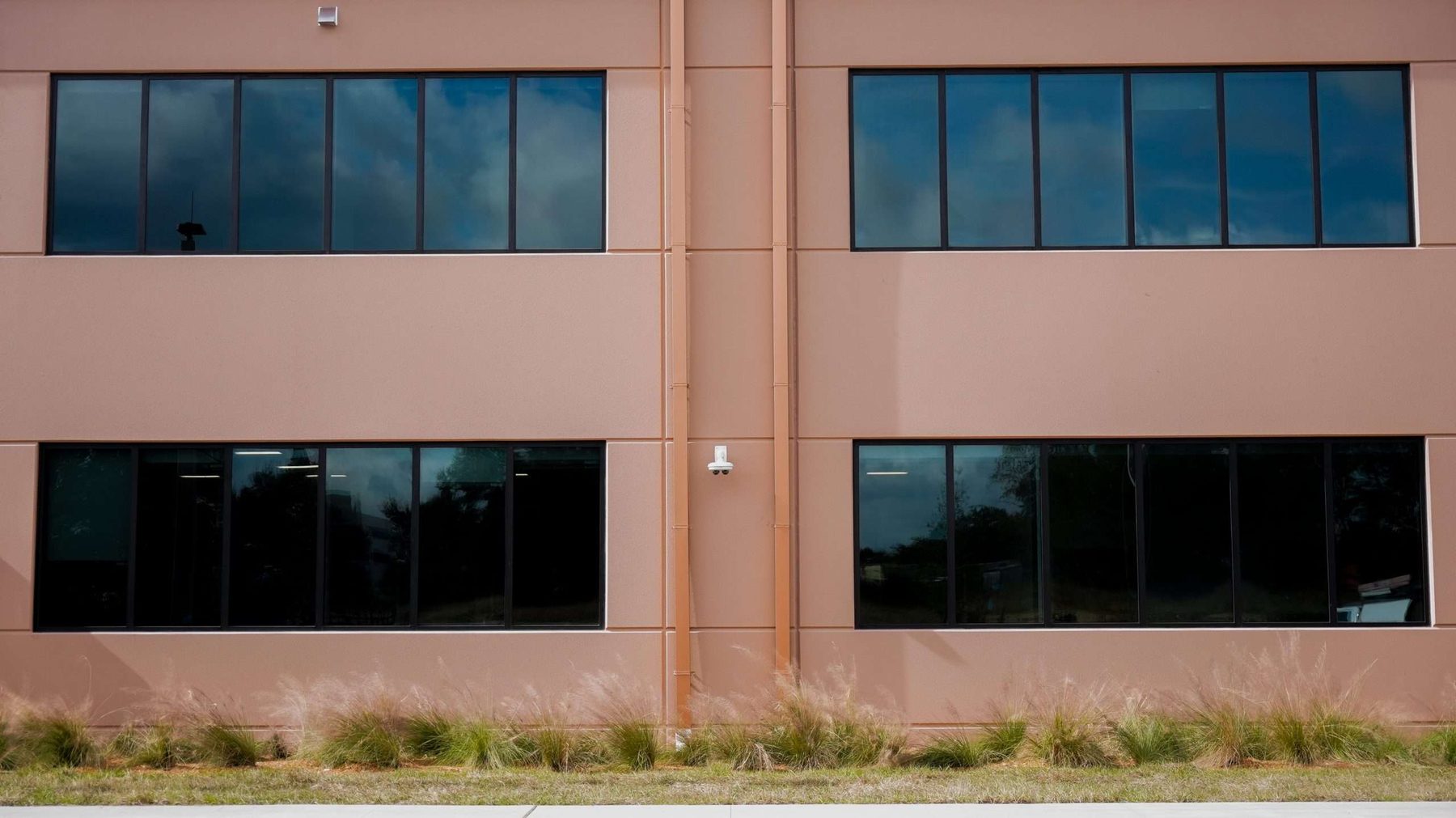
IGU glazing across storefront, curtain wall, and punched openings.
ACG installs and replaces commercial IGUs as part of storefront, curtain wall, and punched opening scopes across Florida.
IGU questions owners and PMs ask.
What is an IGU?
An insulating glass unit (IGU) is two or more glass lites separated by a sealed, gas-filled cavity. The spacer holds the lites apart and carries desiccant to keep the cavity dry; the perimeter seal keeps moisture out and the gas fill in. It's the standard glazing makeup for commercial vision glass today, in storefront, curtain wall, and punched-opening systems alike.
How long do commercial IGUs last?
Honestly - it depends more on the seal and installation quality than any fixed number. A well-fabricated, well-installed commercial IGU can perform for decades; a unit with a marginal seal, exposed to a lot of thermal cycling and UV, can fog within a handful of years. There's no single industry-wide lifespan figure we'll stand behind - ask us to look at the specific system and exposure before you plan around an age.
Can you replace just one lite, or does the whole frame need to come out?
In most cases, yes - a single failed IGU can be replaced in place without disturbing the surrounding frame, as long as the frame and glazing pocket are sound. We field-verify pocket dimensions, glazing bite, and setting-block condition before ordering the replacement unit so it fits and matches the surrounding glass as closely as possible.
Is defogging a fogged IGU the same as replacing it?
No. Drill-and-refill defogging services clean the cavity and reseal it, but they don't restore the unit's original hermetic seal - most defogged units fog again within a year or two. On a commercial building, especially where the glazing carries code-driven thermal or life-safety performance, replacing the failed unit is the more defensible scope.
Related pages
Sending a glazing scope to bid?
Send Division 08 to connor@acglass.com. We'll field-verify the existing IGU makeup, flag any spec traps in writing, and quote replacement or new-install scope before award, not after.