
The Florida Building Code is one thing. South Florida's application of it is another. Between HVHZ designations, local amendments, and Miami-Dade's independent product approval process, building in the tri-county region requires glazing knowledge that most out-of-market subs don't have.
The FBC Framework for Glazing
Florida Building Code Chapter 16 governs structural design, including wind loads. Chapter 24 covers glass and glazing specifically. Together, these chapters establish the core requirements:
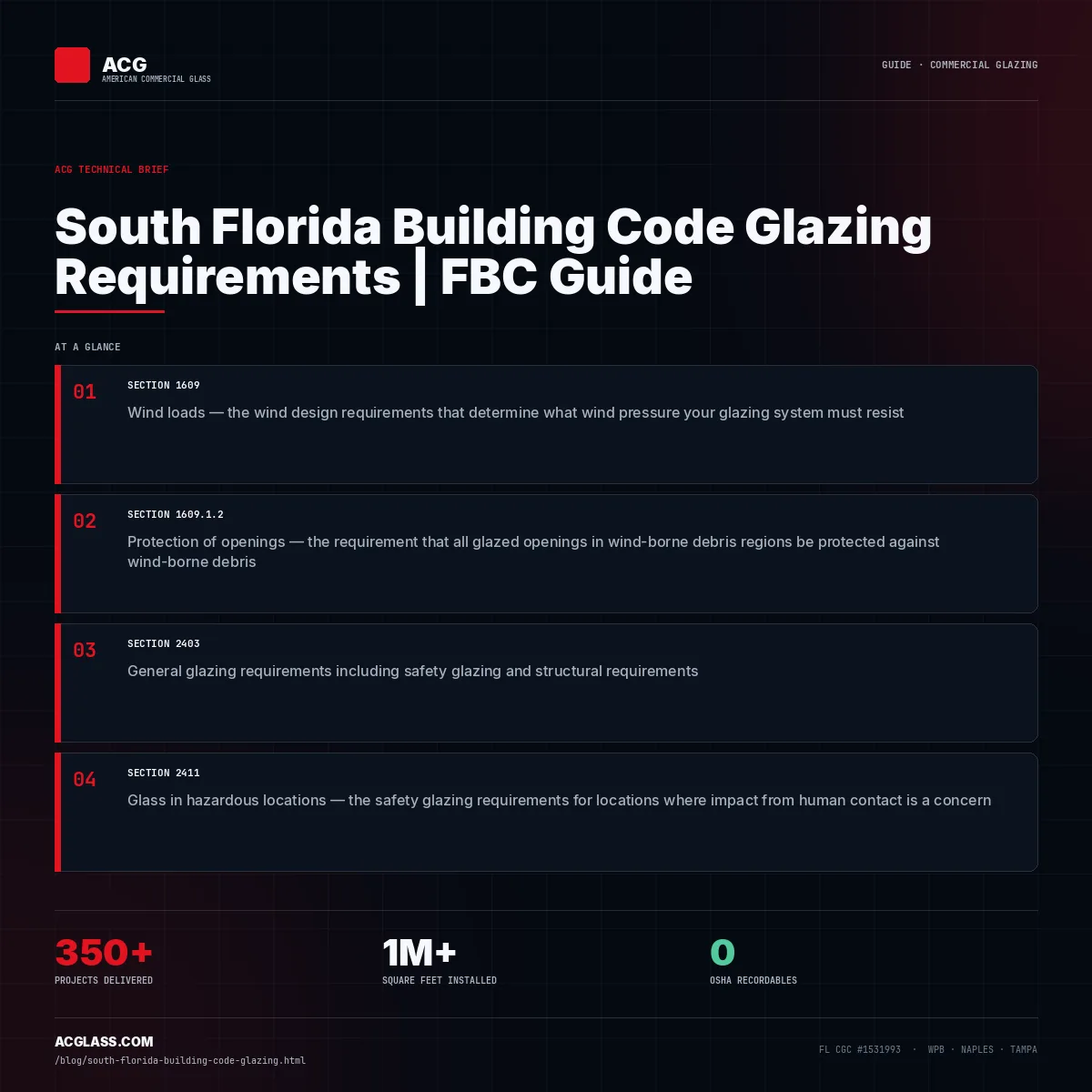
- Section 1609: Wind loads - the wind design requirements that determine what wind pressure your glazing system must resist
- Section 1609.1.2: Protection of openings - the requirement that all glazed openings in wind-borne debris regions be protected against wind-borne debris
- Section 2403: General glazing requirements including safety glazing and structural requirements
- Section 2411: Glass in hazardous locations - the safety glazing requirements for locations where impact from human contact is a concern
Wind Design in South Florida
Florida Building Code uses ASCE 7 wind speed maps to establish design wind speeds. South Florida's design wind speeds are among the highest in the continental US - Miami-Dade's design wind speed is 185 mph (at 3-second gust), and most of the tri-county area is above 140 mph.
These wind speeds translate to specific design pressures that glazing systems must resist. For a high-rise building in Miami, the design pressures on upper-floor corners can exceed 100 psf - numbers that most standard glazing products can't achieve and that require specifically engineered systems.
ACG's project managers review the wind speed and exposure category for every project and confirm that the specified glazing systems can achieve the required design pressures before committing to the scope. Systems that are inadequate for the actual wind design requirements create problems at permit review that can't be solved without redesign.
Wind-Borne Debris Region
South Florida is entirely within Florida's wind-borne debris region. FBC Section 1609.1.2 requires that all glazed openings in buildings in wind-borne debris regions be protected against wind-borne debris.
Two compliance paths:
- Install glazing products that are impact-tested and have a valid product approval for the applicable design wind speed
- Install an approved opening protection system (shutters) over non-impact glazing
For commercial new construction in South Florida, impact glazing is almost always the more practical solution.
HVHZ-Specific Requirements
Miami-Dade and Broward counties are in the HVHZ, which imposes requirements beyond the baseline FBC. The most important is large missile impact testing - products used in HVHZ must be tested with a 9-pound 2x4 impacting at 50 fps, followed by cyclic pressure testing.
Small missile testing only (1.75-ounce steel ball) is not sufficient for HVHZ. Products approved for non-HVHZ wind-borne debris regions using only small missile testing are not compliant for Miami-Dade or Broward projects.
Miami-Dade County Building Code Amendments
Miami-Dade County adopts the FBC with amendments that create additional requirements for construction within the county. For glazing, the most significant is the Miami-Dade Notice of Acceptance requirement:
In Miami-Dade County, products used in HVHZ applications must have either a Miami-Dade Notice of Acceptance (NOA) or a valid Florida Product Approval that specifically includes HVHZ approval. The NOA is issued by Miami-Dade County's Building Code Compliance Office and is the primary compliance documentation for most glazing products.
Broward County recognizes both Miami-Dade NOA and Florida Product Approval (FPA) listings. Either provides acceptable documentation for Broward County HVHZ projects.
High-Rise Building Requirements
Buildings over 75 feet in height are subject to additional requirements under FBC. For glazing:
- Glazing systems must be designed by a Florida-licensed professional engineer
- Shop drawings for high-rise glazing require PE stamp
- Testing and inspection requirements are more rigorous
- Anchor design for curtainwall and window wall requires specific PE analysis
ACG maintains relationships with Florida-licensed structural engineers who specialize in glazing systems. Our shop drawings on high-rise projects are prepared with PE input and stamped appropriately for plan review.
Common Code Issues ACG Catches Early
During drawing review and buyout, ACG commonly identifies:
- Glazing products specified without NOA coverage for the applicable design wind speed
- Systems specified for HVHZ that only have small missile impact testing
- Glass configurations in the drawings that don't match any available NOA listing
- Structural anchor conditions that don't work with the specified system's NOA
These issues are solvable early. They're expensive to solve after material has been ordered or installed. ACG's review process catches them at the right point in the project lifecycle. If you're starting a South Florida project and want a pre-submittal code review on the glazing scope, give us a call.