
Curtain wall recladding - keeping tenants in place while the envelope comes off.
Overclad vs. full replacement, Florida's 25% glazing-area rule, and what phased, occupied-building sequencing actually costs in schedule and coordination. Written for owners, REITs, and GCs managing aging office and hospitality curtain wall stock - not a sales sheet.
Recladding isn't one thing - overclad, full reclad, and reglazing solve different problems.
"Recladding" gets used loosely, but the scope options on an aging curtain wall building are distinct, and picking the wrong one is an expensive mistake:
- Overclad. A new curtain wall or panel system is anchored over the existing one, which stays in place as backup. Tenants generally stay in occupied space during the work, and the building doesn't lose its weathertight envelope at any point in the sequence - the new skin goes up before the old one is fully abandoned. It's typically the fastest and least disruptive option where the existing structure can carry the added dead load.
- Full reclad / replacement. The existing curtain wall system comes out entirely and a new system goes in. This is the route when the existing frame, anchors, or glazing have deteriorated past the point overcladding can responsibly build on top of, or when the project needs a full structural and thermal reset.
- Reglazing. The framing system stays; only the glass infill is replaced. This is the narrowest and generally least expensive scope, but it only solves problems that live in the glass - failed IGU seals, outdated coatings, impact non-compliance - not problems in the frame, anchors, or sealant joints.
The right call depends on a condition assessment of the existing system, not a default preference. An assembly with sound framing and anchors but failed glass is a reglazing job; a building with corroded anchors, degraded structural sealant, or a frame that can't meet current wind-load or energy-code requirements needs a full reclad or, where the structure allows it, an overclad.
Florida's 25% rule - why recladding decisions have a compliance deadline built in.
Florida Building Code's provisions for existing buildings, in Chapter 34, establish that replacement work must comply with current code requirements - not the code that was in force when the building was originally constructed. The specific rule that most often governs a curtain wall recladding decision is the 25% rule: if the total area of replacement glazing in any 12-month period exceeds 25% of the building's total exterior glazing area, the entire replacement scope has to bring the work into compliance with current Florida Building Code, not just the individual panels being swapped.
That's a real planning variable, not a technicality. An owner phasing a recladding project across multiple years to spread cost can inadvertently trigger the 25% threshold partway through, converting what was planned as a like-for-like glass swap into a full current-code compliance scope - including current wind-load, impact, and energy performance requirements - for the whole replacement area. Sequencing and phasing plans should be built around this threshold deliberately, not discovered after the fact.
Florida's 8th Edition (2023) Energy Code also tightened U-factor and SHGC requirements for replacement fenestration, which adds a second compliance layer on top of the 25% rule for owners weighing whether to act now on an aging envelope or defer. Both of these are owner-facing planning considerations that belong in the recladding decision, not just the construction bid.
Recladding around tenants who don't get to move out.
Recladding a vacant building is a different job than recladding a fully leased office tower or an operating hotel. The logistics that change on an occupied building:
- Sequencing and phasing. Work typically proceeds floor-by-floor or elevation-by-elevation so that only a limited portion of the building is ever without its final envelope at one time. Swing-stage and scaffold planning has to account for occupied floors below and above the active work zone.
- Weathertightness continuity. On an overclad approach, the existing system can stay weathertight through most of the sequence. On a full reclad, temporary weather protection - sealed enclosures, temporary panels - has to bridge the gap between removing the old system and closing in the new one, floor by floor.
- Interior protection and noise. Interior finishes, furniture, and equipment near the work zone need protection from dust and debris, and tenants need advance notice of the noisiest work windows. In Miami-Dade and Miami Beach specifically, local construction-noise ordinances constrain which hours exterior demolition and installation work can run, which has to be built into the schedule up front on occupied urban sites.
- After-hours and weekend sequencing. Noisy operations - demolition, anchor drilling - are often pushed to off-hours specifically to reduce tenant disruption, which affects crew scheduling and overall project duration more than owners typically expect going in.
None of this is a reason to avoid recladding an occupied building - it's routinely done - but the schedule and cost only make sense if the occupied-building logistics are priced into the bid from the start, not treated as a change order once the work is underway.
Overclad, full reclad, and reglazing - a qualitative comparison.
The right scope depends on a condition assessment specific to the building. This is a general reference for how the three approaches typically compare, not a substitute for an engineer's evaluation of the existing system.
Common recladding planning traps.
Phasing that trips the 25% rule mid-project
Spreading a recladding project across multiple years to manage cash flow can unintentionally cross the 25%-in-12-months threshold, converting a planned like-for-like swap into a full current-code compliance scope. Model the phasing against the rule before locking a multi-year plan.
Overcladding on a structure that can't take the added load
Overclad only works if the existing structure has the capacity for the new system's added dead load. That's a structural engineering question to answer before the recladding approach is chosen, not after design is underway.
Reglazing prescribed where the frame is the actual problem
Replacing glass alone doesn't fix corroded anchors or degraded structural sealant. A condition assessment of the frame and anchorage, not just the glass, should drive the scope decision.
Occupied-building logistics priced as an afterthought
Phased sequencing, temporary weather protection, and after-hours work windows change the schedule and cost meaningfully on an occupied building. These need to be in the original bid, not added as a change order once tenants start complaining.
Local noise ordinances not built into the schedule
Miami-Dade and Miami Beach both restrict construction-noise hours. On urban occupied-building recladding, that constraint has to shape the crew schedule from day one, not get discovered mid-project.
What we do about it
We run the 25%-rule math against the proposed phasing plan and flag structural-capacity and sequencing risks in writing at the RFI stage - before we quote, not after award.
Full-envelope glazing discipline, applied to recladding scopes.
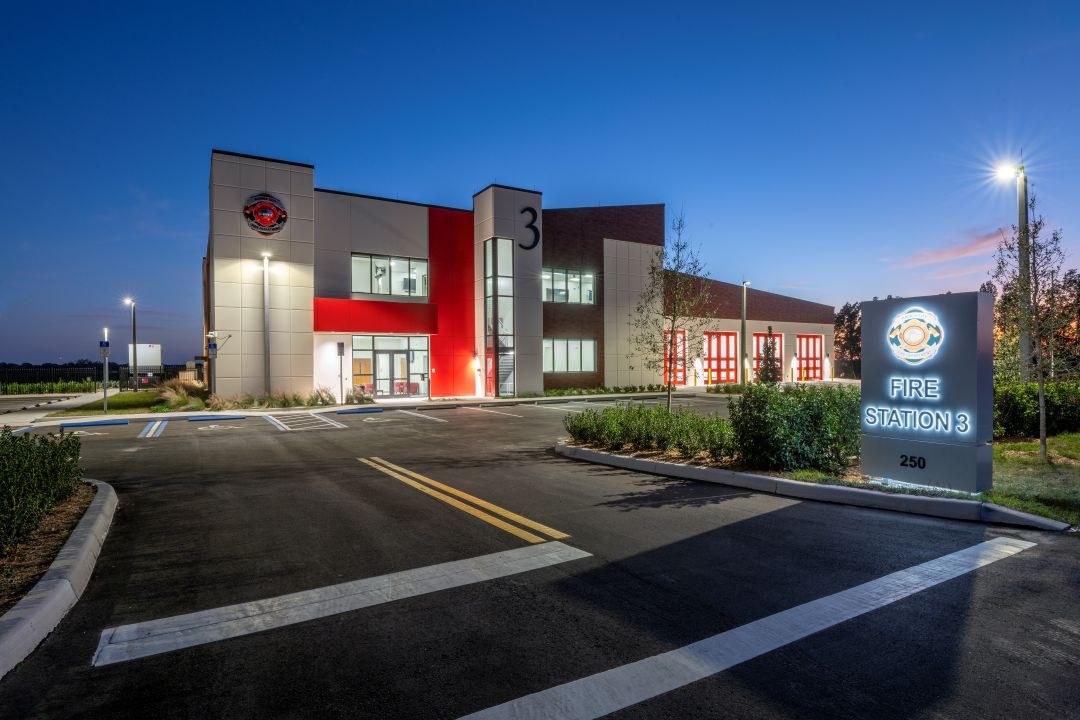
ACG installs and replaces curtain wall, storefront, and punched-opening glazing systems as a Division 08 subcontractor across Florida, with the same code-compliance and field-verification discipline applying whether the scope is new construction or an existing-building recladding project. Our verified public-sector past performance includes full-envelope glazing at the Haines City Public Safety Complex & EOC (25,443 SF, GC Pirtle Construction, completed 2025), the Cudjoe Key fire station for Monroe County, and the Martin County Fire Training facility.
Recladding questions owners and GCs ask.
What's the difference between overcladding and full curtain wall replacement?
Overcladding anchors a new system over the existing curtain wall, which stays in place as backup - generally faster and less disruptive, but it requires the existing structure to carry the added dead load. Full replacement removes the old system entirely, which is necessary when the existing frame, anchors, or sealant have deteriorated too far to build on top of.
What is Florida's 25% rule for glazing replacement?
Under Florida Building Code Chapter 34, if the total area of replacement glazing in any 12-month period exceeds 25% of a building's total exterior glazing area, the entire replacement scope must comply with current Florida Building Code - not the code in force when the building was originally constructed. Phasing plans on multi-year recladding projects need to be modeled against this threshold.
Can a curtain wall be recladded without displacing tenants?
In most cases, yes, with phased sequencing - working floor-by-floor or elevation-by-elevation, maintaining weathertight continuity as work proceeds, and scheduling the noisiest operations for off-hours where noise ordinances or tenant needs require it. Occupied-building logistics need to be priced into the bid from the start rather than treated as a change order.
Is reglazing enough, or does the whole curtain wall need to come out?
Depends on where the problem actually is. If the framing and anchors are sound and the issue is failed IGU seals, outdated coatings, or non-compliant glass, reglazing - replacing only the glass infill - is usually the right, less expensive scope. If the frame, anchors, or structural sealant have degraded, reglazing won't fix the underlying problem and a full reclad or overclad is the more defensible approach.
Does ACG handle curtain wall recladding on occupied Florida buildings?
Yes. ACG prices and installs curtain wall recladding, overcladding, and reglazing scopes as a Division 08 subcontractor, including phased sequencing for occupied buildings. We model proposed phasing against Florida's 25% rule and flag structural-capacity and scheduling risks in writing at the RFI stage. FL CGC #1531993.
Related pages
Weighing a recladding scope?
Send Division 08 and a condition assessment, if you have one, to connor@acglass.com. We'll run the 25%-rule math against your phasing plan and flag logistics and compliance risks in writing before we quote.