
Spandrel glass - the opaque panels doing the hiding.
Ceramic frit vs. shadow box, why spandrel glass has to be heat-treated, and where thermal stress actually breaks a panel. What a color-match or replacement scope involves on a Florida or Tennessee curtain wall. Written for GCs, architects, and owners - not a sales sheet.
Spandrel is the opaque panel that conceals what's behind the glass.
Not every panel in a curtain wall or window wall is meant to be looked through. Between each floor's vision-glass band sits a spandrel zone - the opaque panel that conceals the slab edge, perimeter mechanical, ceiling cavity, and structural connections that nobody wants visible from the street. It's doing an architectural job, not a daylighting one: hide the guts of the building while keeping the same glazed module and sightline as the vision glass above and below it. For the plain-English version of what spandrel is and how it's used, see our spandrel glass glossary explainer; this page is the commercial spec, thermal-risk, and replacement reference.
There are two standard ways to build a spandrel panel:
- Ceramic frit spandrel. A single lite of glass with opaque ceramic ink fired onto the interior-facing surface - typically a solid, 100%-coverage frit pattern on spandrel, though dot-pattern and gradient frit exist for other applications. It's the lower-cost, thinner-profile option, and the one most commercial jobs default to.
- Shadow box spandrel. A vision lite - clear or low-E - with an opaque insulated panel set back 6 to 12 inches behind it. The setback creates real depth and a shadow line that reads differently in daylight than a flat frit panel does. It costs more and needs more room in the wall section, but it's the higher-end look architects reach for on a prominent facade.
Both approaches solve the same problem - hide the structure, keep the module - with different cost, depth, and appearance trade-offs. Neither is "better" outright; the choice comes down to budget, wall-section depth, and how much the design wants the spandrel band to read as a shadow versus a flat color field.
Why spandrel glass has to be heat-treated.
An opaque spandrel panel absorbs a lot more solar heat at its center than at its shaded, frame-covered edge. That temperature difference puts the edge of the glass in tension - and if the tension exceeds what the glass can take, the lite cracks. ASTM C1048 is the governing U.S. specification for the heat-treated glass used to resist that stress:
ASTM C1048 also defines a specific "Condition B" category for ceramic-coated spandrel glass. One detail worth flagging to a design team: published technical literature notes that a full-coverage ceramic frit coating can measurably reduce the flexural strength of the underlying heat-treated glass compared to the same uncoated lite - which is part of why darker or fully-fritted spandrel panels sometimes get bumped from heat-strengthened to fully tempered at the engineering stage. (NGA/Glass.org Technical Bulletin FB62-19, Thermal Stress in Heat-Treated Spandrel Glass.)
Where thermal stress actually shows up - and why it's a bigger conversation on a Florida facade.
Thermal stress cracking on spandrel glass almost always starts at the edge - the part of the lite sitting in the shade of the frame while the center of the same panel is heating up in direct sun. The bigger that center-to-edge temperature gap, the more tension the edge carries, and heat-treated glass exists specifically to give the panel enough strength margin to survive that gap without cracking.
A few conditions make that gap worse, and they're all things a spec reviewer or GC can actually check for before glass gets ordered:
- Dark, solid frit colors absorb more solar radiation at the panel's exposed center than a lighter color or a dot-pattern frit does.
- Insulation touching the back of the glass creates a hot spot right where the panel needs to shed heat - published guidance recommends maintaining a real air gap between the spandrel glass and any insulation or back-pan behind it, rather than letting the two touch.
- Shadow box cavities with poor ventilation can trap heat behind the vision lite, raising the temperature the inner glass has to tolerate.
- Partial shading - an overhang, an adjacent building, a sunshade - that shades part of a panel but not all of it can create a sharper temperature gradient across a single lite than full sun or full shade would.
Florida's solar load doesn't create a different failure mechanism than anywhere else - it's the same edge-tension physics everywhere. What it does is push more panels into higher-risk territory on the margin: more hours of direct, high-intensity sun on south- and west-facing spandrel bands means the center-to-edge gap referenced above runs hotter, more often, on a Florida facade than on an equivalent building in a milder climate. That's a reason to take the frit-color and ventilation details seriously at the design stage, not a reason to assume every Florida spandrel panel needs to jump straight to fully tempered - the right call is still project-specific and belongs in a thermal stress analysis, not a rule of thumb.
Color matching and replacement - where a spandrel scope actually goes wrong.
Ceramic frit can be matched to essentially any architectural color the design calls for, including custom color specs reviewed against physical samples rather than a chip or a screen. That flexibility is also the risk: a replacement panel or a facade color refresh that isn't checked against a physical sample in daylight can land close but visibly off once it's installed thirty feet up next to the original run.
On a replacement or color-refresh scope, a few things matter more than they look like they should on paper:
- Frit color and coverage have to match the original - solid vs. dot-pattern, warm-neutral vs. cool-neutral, and coverage percentage all read differently in daylight even when the base pigment is nominally the same.
- Heat-treatment kind should match or exceed the original, not just the color - swapping a fully tempered panel for a heat-strengthened one to save cost changes the thermal-stress margin the original design assumed.
- Shadow box setback and backer-panel color have to be verified in the field before ordering - a slightly different setback depth changes how the shadow line reads even with an identical frit color on the vision lite.
- Physical daylight samples, not swatches, should be the final approval step on any color match - ceramic frit and shadow box panels both look different under direct sun than they do indoors.
Common spandrel spec traps.
Heat-treatment kind left unspecified
A spec that calls out frit color and glass thickness but leaves heat-strengthened vs. fully tempered to the fabricator can end up under-engineered for a dark, fully-fritted panel in a high-solar-gain location. Confirm the kind explicitly, especially on darker colors.
Insulation touching the glass
Field-installed insulation or a back-pan set tight against the spandrel glass creates the hot spot that thermal-stress guidance specifically warns against. Verify the air gap during installation, not after a panel cracks.
Swatch-only color approval
A frit color approved from an indoor swatch or a screen rendering can read noticeably different in direct daylight thirty feet up a facade. Insist on a physical daylight sample before locking the color.
Mismatched replacement panels
A single replacement spandrel lite that doesn't match the surrounding run's frit coverage, color, or heat-treatment kind is immediately visible from the street - spandrel panels sit in long, uniform bands where any mismatch stands out.
Treating spandrel as a lower-risk afterthought
Because nobody's looking through it, spandrel sometimes gets less design attention than vision glass - but it's carrying real thermal-stress and safety-fallout considerations of its own, particularly at height.
What we do about it
We confirm heat-treatment kind and frit spec against the surrounding run before we quote a spandrel scope, and we ask for a physical daylight sample before any color match gets locked.
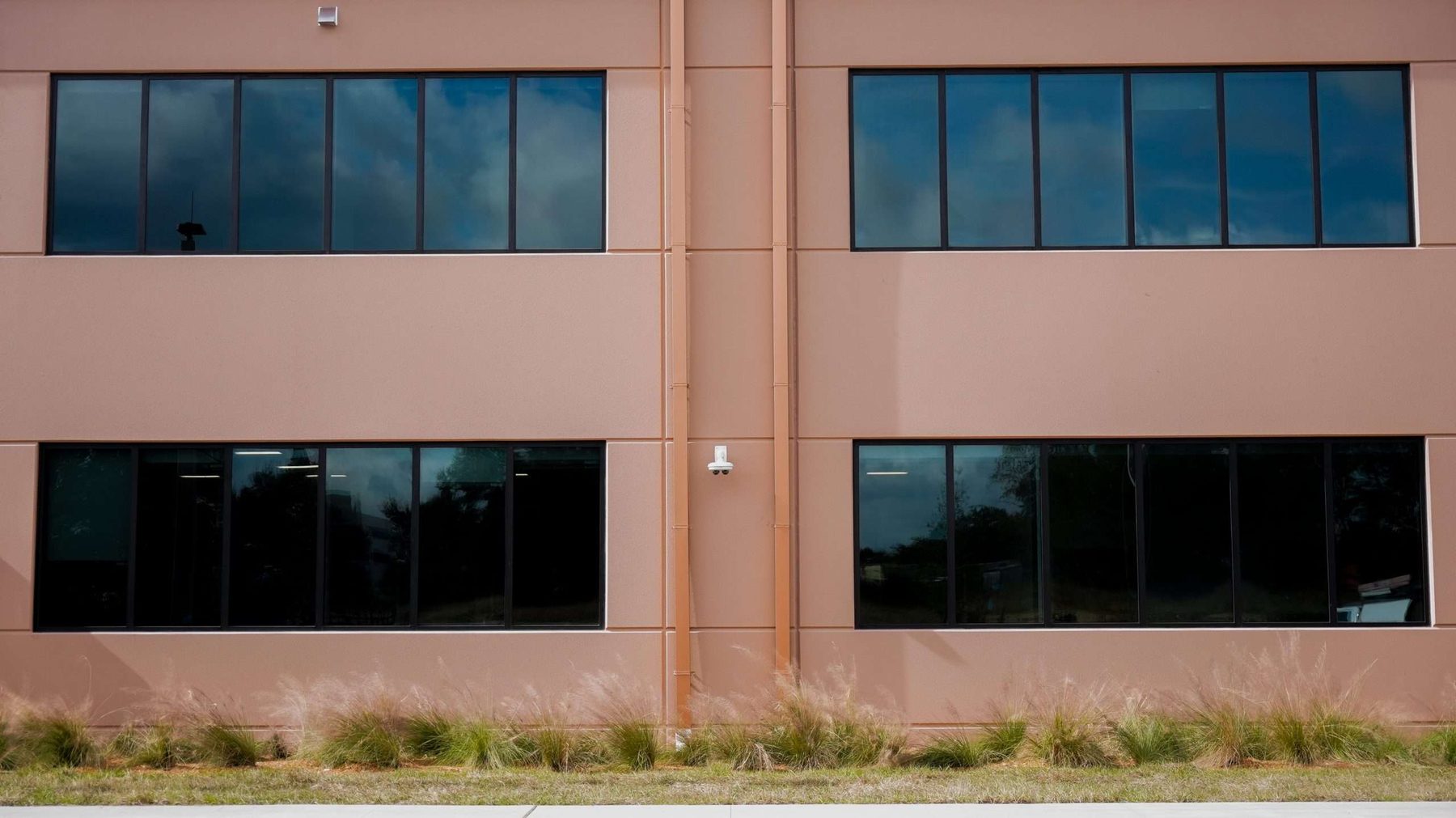
Curtain wall and storefront glazing across vision and opaque zones.
ACG glazes both vision and spandrel zones as part of curtain wall and storefront scopes across Florida.
Spandrel glass questions GCs and architects ask.
What is spandrel glass?
Spandrel glass is opaque architectural glass installed in curtain walls and window walls at slab lines, between floor levels, to conceal interior structure - slab edges, ceiling cavities, and mechanical chases - from the exterior. It comes in two main constructions: ceramic-frit spandrel, where opaque color is fired onto the back of a single lite, and shadow box spandrel, a vision lite with an opaque panel set behind it.
Does spandrel glass need to be tempered?
It needs to be heat-treated under ASTM C1048 - either heat-strengthened or fully tempered - because the opaque back surface absorbs solar heat and creates thermal stress at the shaded glass edge. Heat-strengthened is a common baseline; fully tempered is often specified for darker frit colors, shadow box conditions, or the inner lite of an insulated spandrel unit, based on a project-specific thermal stress evaluation.
What's the difference between ceramic-frit and shadow box spandrel?
Ceramic-frit spandrel is a single lite with opaque ceramic ink fired onto its back surface - thinner, lower cost, and the more common default. Shadow box spandrel uses a vision lite with an opaque insulated panel set back 6 to 12 inches behind it, creating a dimensional shadow line. Shadow box costs more and needs more wall-section depth, but reads as a higher-end architectural finish.
Can spandrel glass be matched to any color?
Ceramic frit can be matched to virtually any architectural color, including custom specs - solid, dot-pattern, and gradient frit are all available. The catch is that a color approved from a swatch or screen can read differently in direct daylight thirty feet up a facade. Always review a physical sample in daylight before locking a color match, especially on a replacement or refresh scope.
Is Florida's climate harder on spandrel glass?
The failure mechanism - edge tension from a center-to-edge temperature gap - is the same everywhere. Florida's high solar load means more hours of intense direct sun on south- and west-facing spandrel bands, which pushes more panels toward the higher end of the thermal-stress range on the margin. That's a reason to take frit color and ventilation details seriously at design, not a reason to assume every panel needs fully tempered glass by default - the right call is project-specific.
Does ACG install and replace spandrel glass?
Yes. ACG glazes spandrel panels as part of curtain wall and storefront scopes, and handles single-panel replacement and facade color-refresh work: field-verifying frit color, heat-treatment kind, and shadow box setback against the surrounding run before ordering. FL CGC #1531993.
Related pages
Sending a spandrel or curtain wall scope to bid?
Send Division 08 to connor@acglass.com. We'll confirm heat-treatment kind against the frit spec, field-verify the existing run before a replacement quote, and flag thermal-stress risks in writing before we quote.