
Glazing lead times are one of the most underestimated schedule risks in commercial construction. A GC who assumes storefront arrives in two weeks is going to have a bad day. Here's the current reality on lead times for each major system type - and what you can do to protect your schedule.
Current Lead Times by System (2026)
These are fabrication lead times from approved shop drawings. Add time for submittal preparation and engineering review on the front end.
| System | Lead Time | Notes |
|---|---|---|
| Standard storefront | 4-6 weeks | Standard colors and sizes only |
| Impact-rated storefront | 5-7 weeks | Add 1-2 weeks for laminated glass |
| Commercial impact windows | 6-8 weeks | Hurricane season can push to 10 weeks |
| Window wall | 8-12 weeks | Depends on system complexity and size |
| Curtainwall (stick-built) | 10-14 weeks | Shop drawings must be complete and approved |
| Curtainwall (unitized) | 14-20 weeks | Factory panel fabrication takes longer |
| Eurowall / opening glass wall | 12-16 weeks | European fabrication adds shipping time |
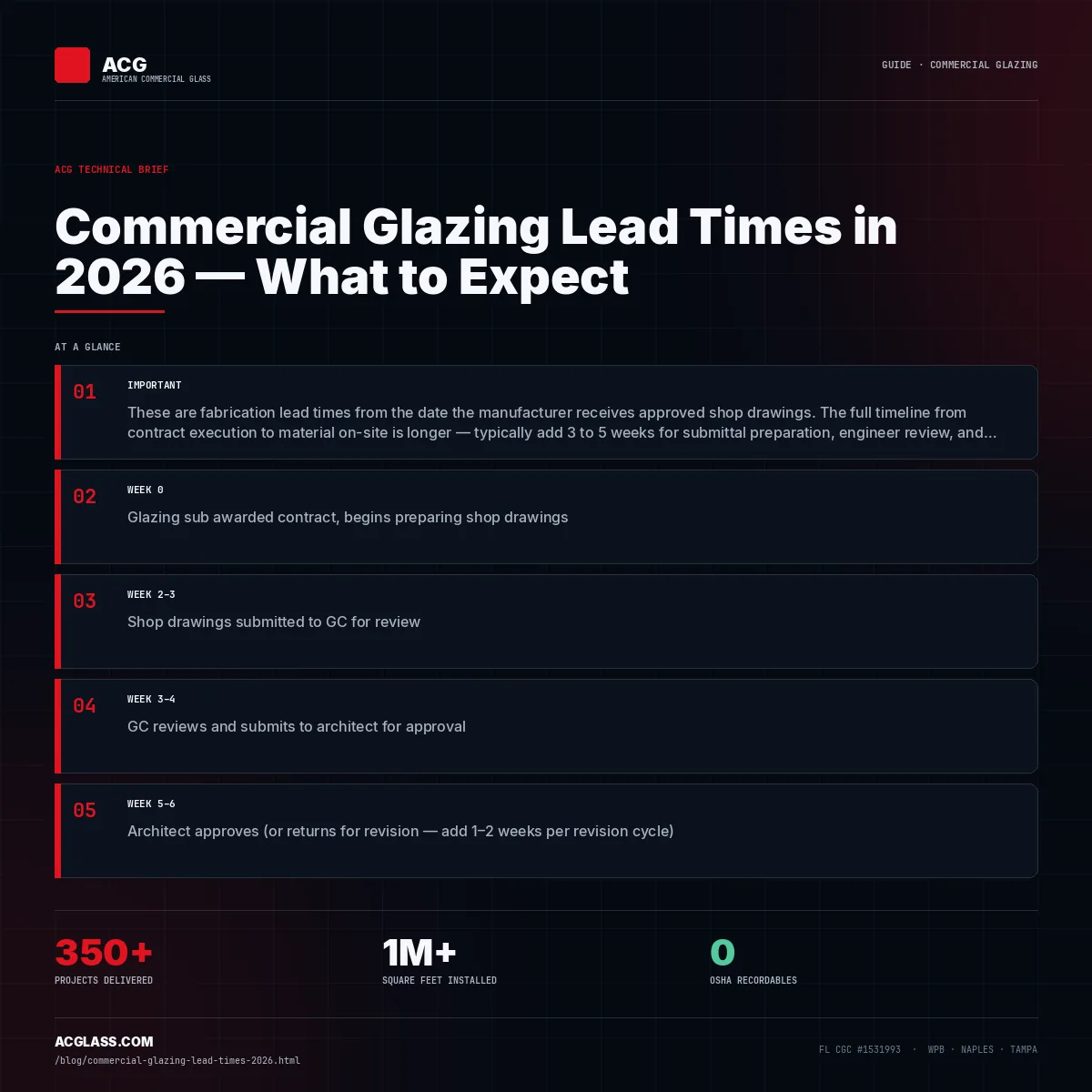
Important: These are fabrication lead times from the date the manufacturer receives approved shop drawings. The full timeline from contract execution to material on-site is longer - typically add 3 to 5 weeks for submittal preparation, engineer review, and approval cycles.
What the Clock Looks Like for a GC
Here's how the full glazing timeline looks from the GC's perspective on a typical storefront project:
- Week 0: Glazing sub awarded contract, begins preparing shop drawings
- Week 2-3: Shop drawings submitted to GC for review
- Week 3-4: GC reviews and submits to architect for approval
- Week 5-6: Architect approves (or returns for revision - add 1-2 weeks per revision cycle)
- Week 6: Approved shop drawings released to manufacturer
- Week 10-12: Material fabricated and ready to ship
- Week 11-13: Material arrives on-site
- Week 12-16: Installation complete
For curtainwall, the same timeline stretches to 20+ weeks from contract execution to installation completion. On a high-rise with unitized curtainwall, it can be 30 weeks or more.
What Makes Lead Times Longer
Several factors consistently push lead times beyond the standard ranges:
Non-Standard Colors
Standard anodized finishes - clear, dark bronze, black - are stocked or quick-turn. Custom colors (custom powder coat RAL colors, special anodize shades, two-tone finishes) require custom finishing runs that add 2 to 4 weeks.
Custom Glass Sizes
Standard glass sizes are cut from stock. Oversized panels - anything exceeding typical lite size limits - require special fabrication. Large glass panels for curtainwall applications may need to be sourced from specific facilities with jumbo glass handling capability. Add 1 to 3 weeks.
HVHZ Code Region
Projects in Miami-Dade and Broward (HVHZ) require products with Miami-Dade NOA documentation. Not every product or configuration has NOA. If the specified system doesn't have NOA for your exact configuration, the manufacturer may need to test a new configuration - adding significant time. Always confirm NOA status before specifying a product for HVHZ projects.
Hurricane Season
Florida's hurricane season runs June through November. Demand for impact-rated glass products peaks in this period - particularly after a named storm generates replacement orders. If your project has impact glazing and you're planning installation during active season, add 2 to 4 weeks to standard lead times as a buffer.
Incomplete Submittals
Every submittal revision cycle adds 1 to 2 weeks to the timeline. Shop drawings returned "revise and resubmit" three times can push your schedule out 4 to 6 weeks before the manufacturer even begins fabrication. The fix is making sure the drawings are complete and correct the first time - which starts with having complete construction drawings and specifications at bid time.
How to Plan Around Lead Times
Glazing lead times are fixed - you can't compress fabrication. The only lever is getting started earlier. Here's how to build it into your schedule:
Award Glazing Early
Glazing is often awarded later than it should be - after structural steel, after MEP, after everything else. But glazing lead times are long enough that it should be awarded simultaneously with or just after structural. For a curtainwall scope, award glazing as soon as structural is committed.
Pre-Approve Glass Spec
Have the architect confirm the glass specification before bid day. Post-award spec changes that require a different glass product restart the submittal clock. A confirmed spec means the sub can order glass immediately after award while shop drawings are in progress.
Use a Phased Submittal Approach
Don't wait for complete shop drawings before submitting. Submit in phases - Phase 1 submittals for the first areas being installed, Phase 2 for the balance. This allows fabrication to begin on Phase 1 while Phase 2 drawings are still being reviewed.
Build Float Into Your Schedule
Don't schedule glazing installation immediately after the planned material delivery date. Build in 1 to 2 weeks of float. If material arrives late - even by a week - you need buffer before it becomes a critical path problem.
Communicate with Your Sub Early
Ask your glazing sub at bid time: "What is your current lead time for this system type?" Lead times fluctuate with market conditions. Your sub has real-time visibility that the manufacturer's website doesn't reflect. That conversation at bid time can prevent a schedule surprise three months later.
For more on the full glazing timeline, see our article on how long storefront installation takes and our guide on how to get a glazing bid in Florida. Our Scope Engine tool can help GCs generate a quick scope outline. See our services page for the full range of systems ACG installs.
Tips for Avoiding Glazing Schedule Problems
- Never assume glazing is on-hand. Even standard products are not warehouse items. Every commercial glazing order is custom fabricated to your project's dimensions.
- Confirm lead times at bid time, not after award. A glazing sub who was awarded at a certain lead time may have a longer lead time by the time they're ready to order - market conditions change.
- Don't hold shop drawings for minor changes. A one-week hold to resolve a minor detail can cost you two weeks of float if it pushes the review cycle into the next week.
- Track submittals actively. Don't wait for the glazing sub to flag a delayed approval. Check submittal status weekly and escalate if the architect hasn't responded within the specified review period.
- Order specialty items first. Special glass coatings, custom colors, oversized panels - these take longest. If your project has any of these, order them immediately after award, even before shop drawings are complete for the standard items.
ACG works with GCs to flag lead time risks at bid time - not after award. We include current lead time estimates in every bid we return, so you can build an accurate schedule from day one. See our GC resources page for how we handle the full submittal and procurement process.
Frequently Asked Questions
What are typical commercial glazing lead times in 2026?
Standard storefront runs 4 to 6 weeks from approved submittals. Impact-rated storefront runs 5 to 7 weeks. Impact windows for commercial projects run 6 to 8 weeks. Curtainwall systems run 10 to 14 weeks for stick-built, 14 to 20 weeks for unitized. Eurowall and opening glass wall systems run 12 to 16 weeks. Add 3 to 5 weeks for submittal preparation and engineering review before fabrication begins.
What causes commercial glazing lead times to increase?
Non-standard colors add 2 to 4 weeks. Custom oversized glass sizes add 1 to 3 weeks. HVHZ projects with NOA requirements can add review time. Hurricane season peak demand (June-November) adds 2 to 4 weeks for impact products. Incomplete shop drawings that require multiple revision cycles add 1 to 2 weeks per cycle.
When should a GC release glazing for fabrication?
For curtainwall and curtainwall-adjacent systems, release 16 to 20 weeks before the required on-site date. For storefront, 8 to 10 weeks minimum. Release as soon as rough opening sizes are confirmed from structural drawings - do not wait for full construction documents. Earlier release always provides schedule protection. Holding fabrication release "until drawings are finished" is the most common cause of glazing schedule delays.