
A glazing contractor who installs hurricane impact windows on homes and one who installs a 15,000 square foot curtainwall on an office tower might both carry the word "glazing" on their website. They are not the same business. The products they handle, the documentation they produce, the code sections they answer to, and the project scheduling they operate under are fundamentally different - and hiring a residential-oriented glazing company to do commercial work routinely ends badly for the GC, the owner, and the architect of record. Here's the actual difference, laid out clearly, so that specifiers and developers can make informed decisions about which trade to engage.

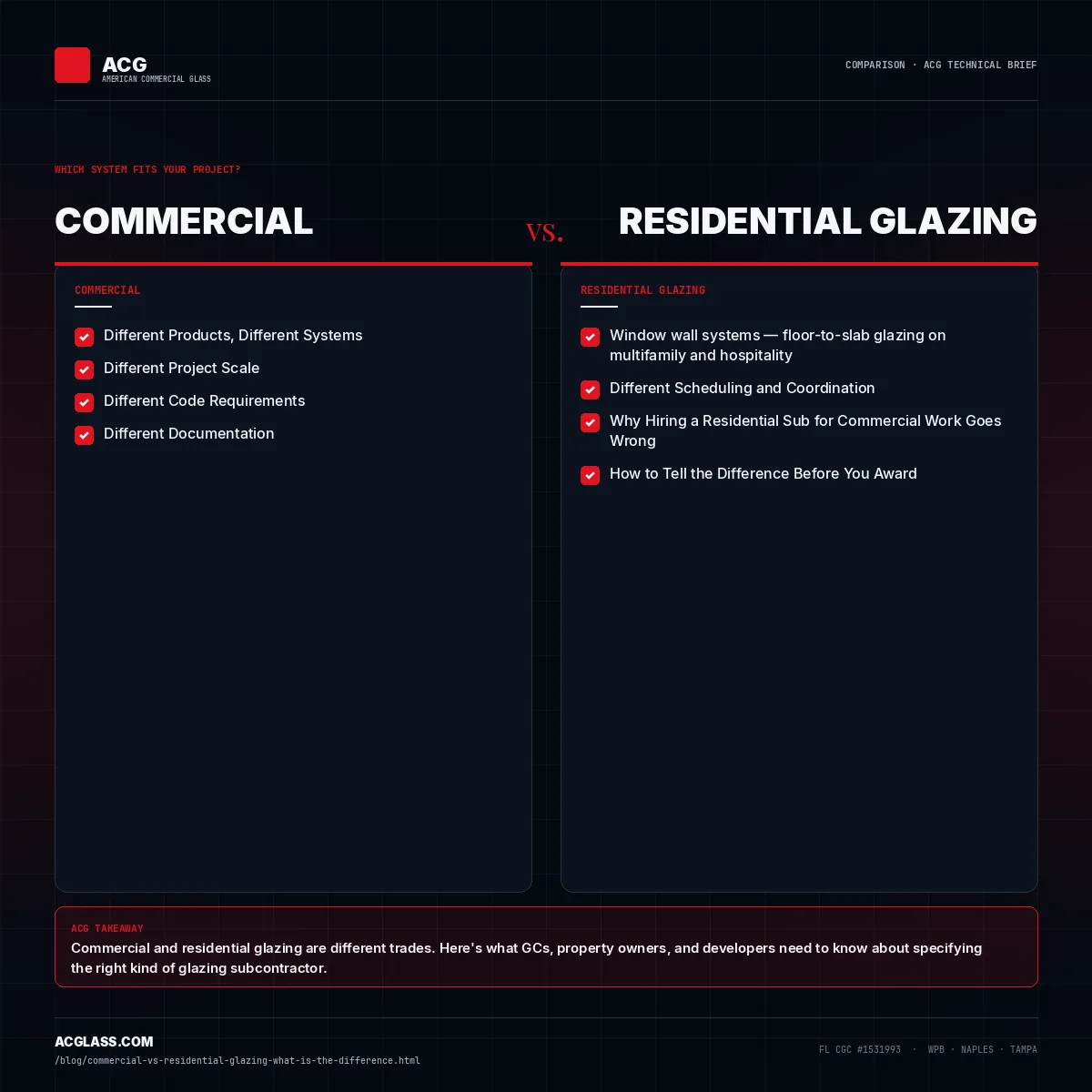
Different Products, Different Systems
The first and most visible difference is what each trade actually installs. A residential glazier's core products are punched-opening impact windows (5'0" x 4'0" is typical), sliding glass doors for homes, and French doors - usually from a small set of product lines like PGT, CGI, or Andersen. They may also install hurricane shutters (accordion, roll-down, or Bahama). That's the bulk of the business.
A commercial glazier's core products are engineered systems, not punched openings:
- Storefront systems (ES-8000, ESWindows ES-8000, ESWindows ES-9500) - 2" x 4-1/2" or 2-1/2" x 6" aluminum framing with glass spans from floor to transom
- Curtainwall systems (GW-7000, ESWindows ES-CS1325 stick curtain wall, ESWindows MCW) - structural framing covering entire building facades, often multi-story
- Window wall systems - floor-to-slab glazing on multifamily and hospitality
- Entrance systems - medium-stile and wide-stile commercial aluminum doors with panic hardware, electric strikes, card readers, automatic operators
- Automatic entrance doors (Stanley, Horton, Record) - sliding and swinging automatic systems with ADA compliance
- Interior glass partition systems - demountable office wall systems, frameless glass walls, all-glass doors
- Fire-rated glass assemblies - for rated corridors, stairwells, occupancy separations
A residential impact window installer has rarely touched most of those systems. The tooling is different, the fabrication is different, the anchoring is different, and the engineering submittals are different. Asking them to install a 40-foot curtainwall is asking a different trade entirely.
Different Project Scale
A typical residential impact window job is 8 to 20 openings, maybe 300-600 square feet of glass total, installed over two or three days by a two-person crew. A typical commercial project might be 4,000 to 40,000 square feet of glazing across dozens of framing types, installed over weeks or months by rotating crews of 4-12, with coordinated lift equipment and scheduled crane picks.
The operational difference is not cosmetic. Commercial glazing subs maintain dedicated project management staff, dedicated estimators, shop drawings departments, and field supervision independent of the installers. Residential operators often have a single owner-operator who estimates, orders, and sometimes installs the product themselves. When the commercial GC expects weekly schedule updates, submittal responses within five working days, and RFIs addressed with stamped drawings, the residential-oriented sub doesn't have the infrastructure to deliver.
Different Code Requirements
Residential glazing in Florida operates under the Florida Building Code, Residential, 8th Edition. Commercial glazing operates under the Florida Building Code, Building, 8th Edition and the Florida Building Code, Energy Conservation, 8th Edition, with different prescriptive paths, different load calculations, and different inspection regimes.
Specific areas where the codes diverge:
- Energy compliance paths - commercial work often uses ASHRAE 90.1-2019 alternative compliance, which residential specifiers rarely encounter
- Wind load calculations - commercial buildings classified as Risk Category II or higher have different wind pressure envelopes than single-family homes
- Egress and safety glazing - commercial buildings have larger, more complex safety glazing location requirements under IBC Chapter 24
- Fire-rated assemblies - commercial projects routinely include fire-rated glazing (20-minute, 45-minute, 60-minute, 90-minute) that residential work does not
- Accessibility - commercial entries must comply with ADA and FBC Accessibility Code, with defined door width, hardware force, and automatic operator requirements
A residential-trained glazier encountering a fire-rated corridor assembly for the first time will almost always make a spec error - picking a product with the wrong rating, missing the intumescent gasket requirement, or installing into a non-rated frame.
Different Documentation
Commercial Division 08 scopes produce a documentation package that residential work does not. A complete commercial submittal includes:
- Product data sheets and cut sheets for every system component
- Shop drawings showing all elevations, plan details, and sections
- Hardware schedule with function, finish, and electrified options
- Structural calculations and engineering affidavits
- Florida Product Approvals or Miami-Dade NOAs matched to the proposed installation
- Sample warranties (product, glass, finish, installation)
- Mock-up reports if required by the spec
- As-built drawings at project closeout
A commercial glazing sub produces this package as a matter of course, often within three weeks of bid award. A residential-oriented operator asked to produce shop drawings will usually outsource them - which delays the schedule, creates handoff errors, and costs the GC time the project doesn't have.
Different Scheduling and Coordination
Residential work answers to the homeowner. The schedule is usually one week long with soft start and end dates. There's one trade on site (glazing), occasional overlap with the exterior painter or stucco sub, and no GC.
Commercial work answers to a GC-run master schedule with critical path dependencies. The glazing sub coordinates with:
- Framers and waterproofing for rough opening preparation
- Stucco and EIFS trades for window flashing interface
- Roofers for parapet and curtainwall cap coordination
- Electricians for automatic operator power, card reader conduit, and security tie-ins
- Drywall and ceiling trades for interior finish coordination
- Painters for final touch-up
Meeting the master schedule requires a glazing sub who shows up to OAC meetings, responds to RFIs, and moves crews around the building to accommodate other trades. That is a different operational skill than completing a home's impact windows in three days.
Why Hiring a Residential Sub for Commercial Work Goes Wrong
A developer or GC who awards a commercial glazing scope to a residential-focused operator typically sees three failure modes:
- Spec substitutions. The sub can't source the specified commercial system at the volume needed and substitutes a residential-grade product. Architects and code reviewers catch this at submittal or inspection. The sub has to rebuy and reinstall.
- Schedule drift. The sub's production is built around quick residential installs, not multi-week commercial sequences. They over-commit on the schedule, miss deadlines, and push drywall, painters, and finishers behind them.
- Punch-list misery. Field-glazed installs in commercial framing - done by crews used to punched-opening residential work - produce marginal seals, uneven reveals, and failed operating hardware. Closeout punch can run hundreds of items, and warranty calls follow for years.
None of these failures are hypothetical. They show up on Florida commercial jobsites regularly when the glazing scope gets awarded to the lowest-priced number without regard to the bidder's commercial infrastructure.
How to Tell the Difference Before You Award
A few checks separate commercial glazing subs from residential operators who have added a commercial line:
- Their portfolio shows commercial projects - office, hospitality, multifamily, healthcare, industrial - with named GCs, not just project addresses
- They reference Division 08 specifications using the correct MasterFormat section numbers (08 41 13 Aluminum Storefront, 08 44 13 Glazed Aluminum Curtain Walls, etc.)
- Their proposal format includes alternates, unit prices, and exclusions - not just a single-number lump sum
- Their manufacturer partnerships include commercial product lines (ESWindows), not just residential impact brands
- They can name active GC references - the PM you can call, not a line on a brochure
Review a prospective sub's portfolio before the first conversation. If the pinned projects are homes and resorts, make your own call. ACG is a commercial-only glazing subcontractor - not a residential operator who added commercial work. Every project in the ACG portfolio is a commercial scope, and the operating infrastructure is built around commercial Division 08 delivery. See Wave Food Hall and Atlantic Fields Golf House for recent examples of the type of coordinated commercial work we perform, or our West Palm Beach commercial glazing regional page for local project history.
Ready to get started?
ACG is Florida's commercial-only glazing specialist. Storefront, curtainwall, impact, entrance systems, fire-rated. Send your commercial plans and we'll return a Division 08 scope inside 48 hours.