
Fire-rated glass is required by the Florida Building Code in specific locations - egress corridors, stairwells, and occupancy separations among them. Getting the rating and type right matters. Wrong glass in a fire assembly can fail inspection, require removal, and delay your certificate of occupancy.
When Fire-Rated Glass Is Required
Fire-rated glass is required wherever the Florida Building Code requires a fire-resistance rated opening protective in a rated wall or partition. The Florida Building Code adopts the International Building Code (IBC). Key locations where fire-rated glazing appears in commercial construction:
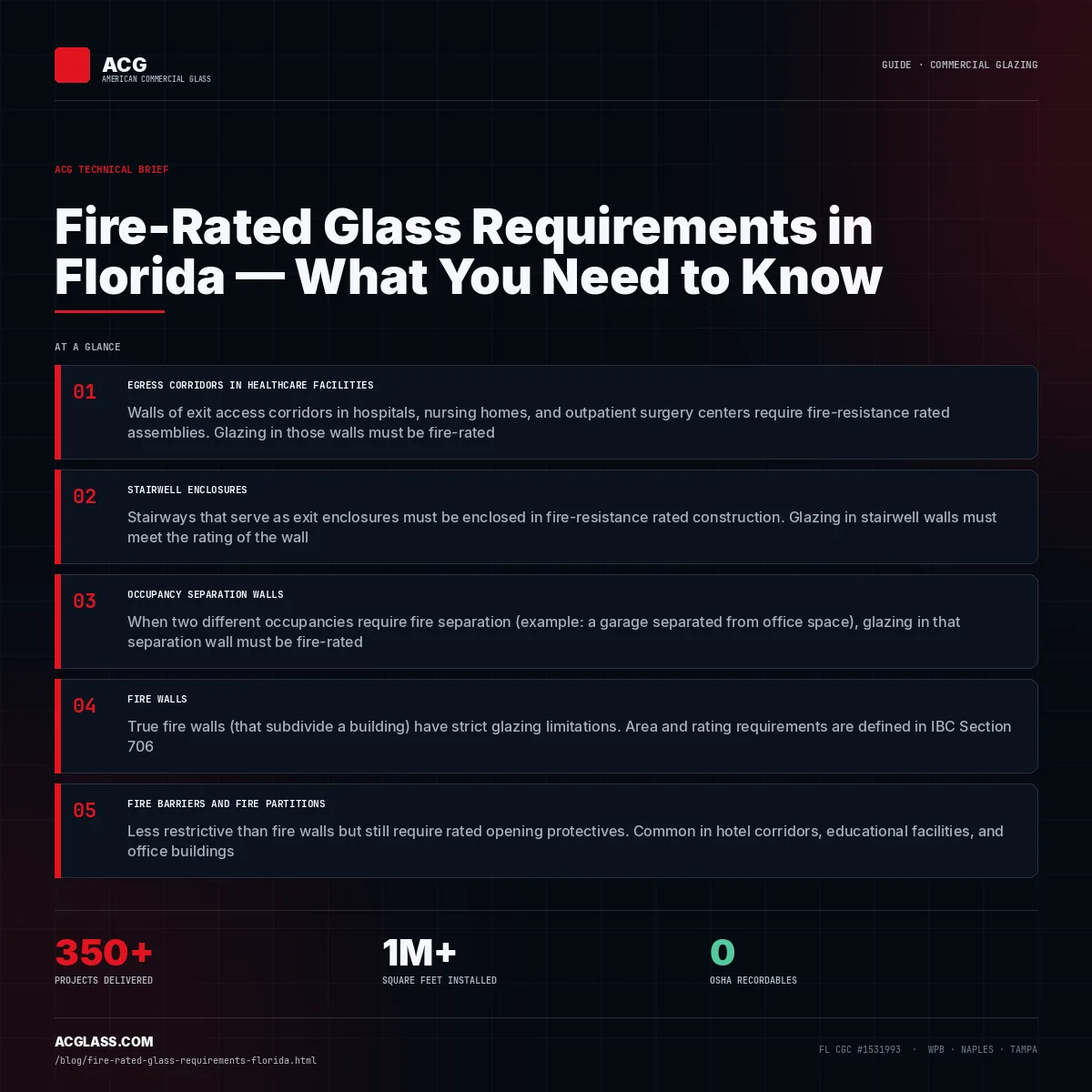
- Egress corridors in healthcare facilities: Walls of exit access corridors in hospitals, nursing homes, and outpatient surgery centers require fire-resistance rated assemblies. Glazing in those walls must be fire-rated.
- Stairwell enclosures: Stairways that serve as exit enclosures must be enclosed in fire-resistance rated construction. Glazing in stairwell walls must meet the rating of the wall.
- Occupancy separation walls: When two different occupancies require fire separation (example: a garage separated from office space), glazing in that separation wall must be fire-rated.
- Fire walls: True fire walls (that subdivide a building) have strict glazing limitations. Area and rating requirements are defined in IBC Section 706.
- Fire barriers and fire partitions: Less restrictive than fire walls but still require rated opening protectives. Common in hotel corridors, educational facilities, and office buildings.
- Corridor sidelights and borrowed lights: When glass is adjacent to or part of a fire-rated door assembly.
Fire-Rated Glass Rating Levels
Fire ratings are expressed in minutes. Common ratings for glazing:
| Rating | Where Used | Notes |
|---|---|---|
| 20-minute | Corridor walls, sidelights, borrowed lights | Most common rating for wall glazing; no size limit in some assemblies |
| 45-minute | 1-hour rated fire barriers, stairwell walls | Required where 1-hour walls are specified |
| 60-minute | Elevator lobbies, 2-hour fire walls | Less common; requires specific products |
| 90-minute | Exit enclosures, fire walls in Type I/II construction | Most demanding rating; limited products available |
The IBC specifies maximum percentage of wall area that can be glazed at each fire-resistance level. For example, fire windows in fire partitions (Section 714) may not exceed 25% of the wall area in the room. This is a critical limit - many projects try to specify too much glass in rated walls.
Types of Fire-Rated Glass
Wired Glass
The original fire-rated glass. Wire mesh embedded in the glass holds it together during fire exposure. However, wired glass has poor optical quality, a scratched appearance, and low impact resistance. It's being phased out of most applications - IBC requires safety glazing (CPSC 16 CFR 1201) in hazardous locations, and wired glass fails this test. Wired glass can still be used in some non-hazardous locations but is increasingly uncommon in new construction.
Fire-Protective Tempered Glass
Specially heat-treated glass that maintains integrity during fire exposure. It does not stop radiant heat transfer - only flames and hot gases. Used in applications where radiant heat protection is not required (typically when the exposed side is not an occupied area, or where the glass area is small). Maximum 45-minute rating in most products.
Fire-Rated Ceramic Glass
Multi-ply laminated ceramic glass (products like Pilkington Pyrostop, AGC Pyrobel, Vetrotech) achieves high ratings (20 to 120+ minutes) and stops both flames AND radiant heat. This is the only product that meets IBC requirements for locations where radiant heat protection is required. Required for larger glazed openings in rated walls where occupants on the unexposed side could be exposed to heat radiation.
Testing Standards
Fire-rated glazing must be tested and labeled under recognized standards. The key standards in Florida:
- UL 9: Standard for fire tests of window assemblies. Tests glazing installed in walls (not doors). This is the test standard for fire windows, sidelights, and curtainwall glazing in rated walls.
- UL 10B: Fire tests of door assemblies - includes a hose stream test after fire exposure. Required for fire door assemblies including glass lites in fire doors.
- UL 10C: Positive pressure fire door assemblies - more demanding than 10B. Required by IBC for stairwell doors and certain high-use occupancies.
- NFPA 252: Standard methods of fire tests of door assemblies - similar to UL 10B/10C, used by some manufacturers as an alternative listing.
- NFPA 257: Standard for fire tests of window and glass block assemblies - similar to UL 9 for wall installations.
The test standard matters. Glass tested to UL 9 cannot substitute for glass listed to UL 10B in a door. The inspector will check the label on every piece of fire-rated glass. Missing or wrong labels are a common inspection failure.
Fire-Rated Glass in Florida Healthcare and Education
Healthcare and educational projects are the most common applications for fire-rated glass in Florida commercial construction. Both occupancy types have stringent corridor and egress requirements.
In healthcare facilities, the Florida Administrative Code adopts the NFPA 101 Life Safety Code, which has specific requirements for smoke barriers and corridor walls. These may require rated glazing even in locations where the IBC alone would not mandate it.
ACG has installed fire-rated glass assemblies in Florida healthcare facilities. Learn more on our healthcare glazing page. For educational projects, see our educational and institutional glazing capabilities.
For a broader overview of commercial glass types including fire-rated options, see our guide on commercial glass types explained.
If you're specifying fire-rated glass for a Florida project, see our full services page for what ACG handles in fire-rated glazing scope.
Frequently Asked Questions
When is fire-rated glass required in Florida?
Fire-rated glass is required wherever the Florida Building Code (which adopts the IBC) requires a fire-resistance rated opening protective. Common locations include egress corridors in healthcare and educational facilities, stairwell enclosures, occupancy separation walls, and openings in fire barriers and fire partitions. The specific rating required depends on the occupancy type and the fire-resistance rating of the assembly.
What is the difference between fire-rated glass types?
Three main types: (1) Wired glass - original standard, poor optical quality, being phased out. (2) Tempered glass with ceramic interlayer - good clarity, 20-45 minute ratings, but does not stop radiant heat. (3) Fire-protective ceramic glass (Pyrobel, Pyrostop) - multi-ply laminate that stops both flames and radiant heat. Required for larger openings where radiant heat protection is needed. Choose the type based on rating requirement and whether radiant heat protection is required by code in that location.
What is the difference between UL 9 and UL 10B/10C for fire-rated glass?
UL 9 tests fire-resistance of glazing in walls. UL 10B and 10C test fire door assemblies - the hose stream test after fire exposure makes these more demanding. Glass tested to UL 9 cannot substitute for UL 10B-listed glass in a door assembly. Inspectors check the label on every piece. Specify the right test standard - UL 9 for wall applications, UL 10B or 10C for door applications.