
Commercial storefront is one of the most common glazing scopes in construction - and one of the most frequently done wrong. Here's a practical guide for GCs who want to understand what a quality installation looks like and how to keep the scope on track.
ACG is the statewide commercial storefront installer for Florida GCs. Start from the Florida commercial glazing hub, or go straight to a city keeper such as West Palm Beach, Tampa, or Miami.
Rough Opening Requirements
Storefront systems require properly prepared rough openings before installation can begin. The specific requirements depend on the system, but general standards include:
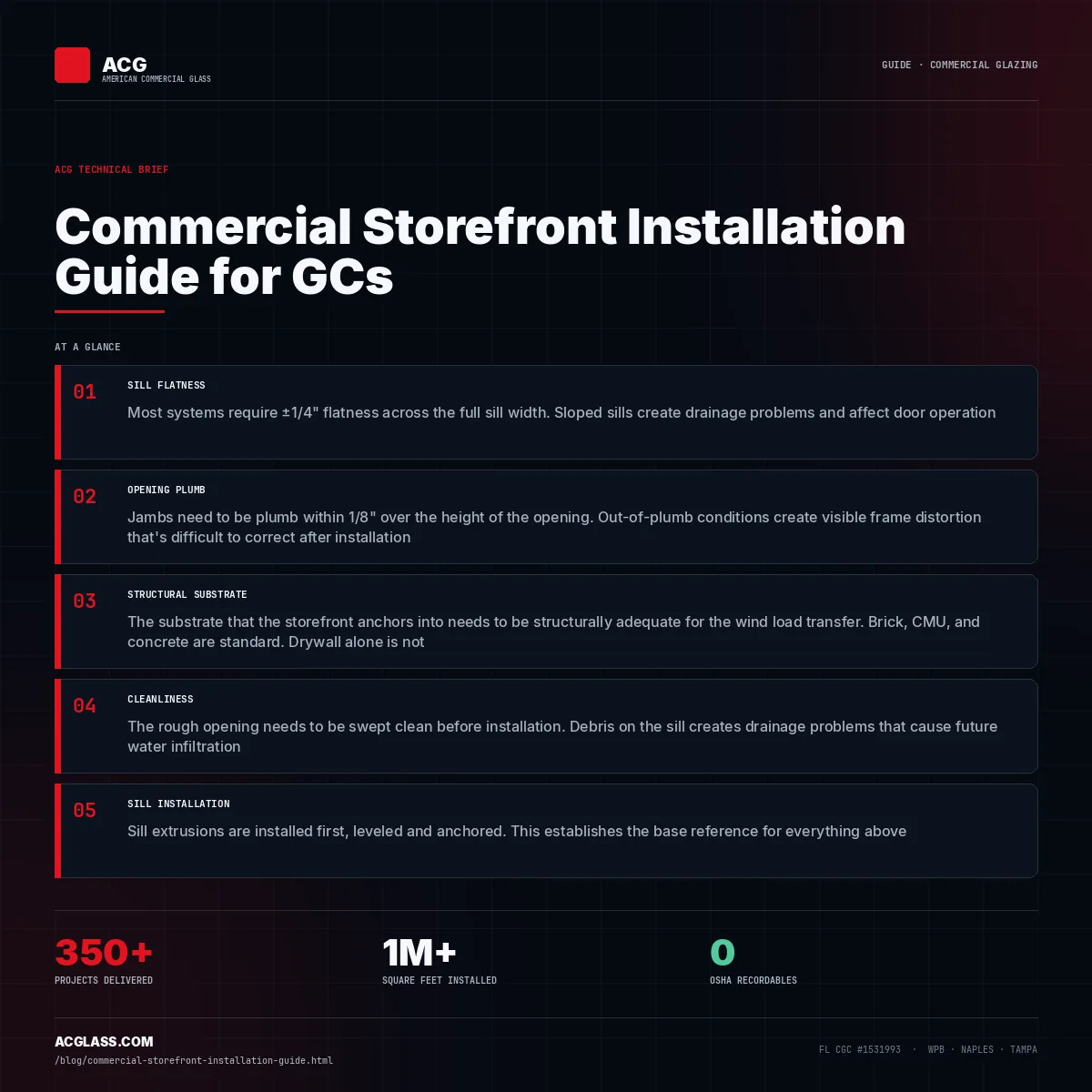
- Sill flatness: Most systems require ±1/4" flatness across the full sill width. Sloped sills create drainage problems and affect door operation.
- Opening plumb: Jambs need to be plumb within 1/8" over the height of the opening. Out-of-plumb conditions create visible frame distortion that's difficult to correct after installation.
- Structural substrate: The substrate that the storefront anchors into needs to be structurally adequate for the wind load transfer. Brick, CMU, and concrete are standard. Drywall alone is not.
- Cleanliness: The rough opening needs to be swept clean before installation. Debris on the sill creates drainage problems that cause future water infiltration.
The Installation Sequence
Properly sequenced storefront installation follows this general flow:
- Sill installation: Sill extrusions are installed first, leveled and anchored. This establishes the base reference for everything above.
- Jamb installation: Vertical jamb extrusions are plumbed and anchored at the sides of the opening.
- Head installation: Head extrusions span across the top of the opening and are anchored to the structure above.
- Intermediate framing: Mullions and horizontal rails fill in the frame.
- Glazing: Glass panels are set in the glazing pockets and secured with glazing stops.
- Hardware: Door hardware, closers, and panic devices are installed and adjusted.
- Perimeter sealant: Sealant is applied at the interface between the storefront framing and the building envelope.
The Perimeter Sealant Detail
Perimeter sealant is where most storefront water infiltration problems originate - and where the most significant variation in installation quality shows up. A proper sealant installation requires:
Backer rod: Foam backer rod establishes the correct sealant depth and provides a backing surface for the sealant. Without backer rod, sealant achieves three-point adhesion (bonding to the substrate on both sides and the back), which restricts joint movement and causes sealant failure.
Joint dimensions: Sealant joints need to be at minimum 1/4" wide and no more than half as deep as they are wide. Joints that are too narrow can't accommodate building movement. Joints that are too deep cure poorly and fail prematurely.
Substrate preparation: All surfaces must be clean, dry, and primed per the sealant manufacturer's requirements. Sealant applied to wet, dusty, or unprepared substrate doesn't adhere properly and fails.
Door Hardware Coordination
Commercial entry doors require hardware - closers, panic devices, locksets, and sometimes automatic operators - that is specified by the architect and needs to coordinate with the storefront frame. Common problems:
- Hardware specified that doesn't fit the frame profile without custom machining
- Closer arm lengths that aren't appropriate for the door width and weight
- Panic device exit functions that don't match the door's security requirements
- Strike plates that aren't recessed flush with the frame face
ACG reviews hardware specifications during buyout and flags conflicts before ordering materials. Hardware conflicts that surface during installation add change orders and schedule delays.
HVHZ Impact Storefront
In Florida's HVHZ, storefront systems must be impact-rated with a valid Miami-Dade NOA. The installation requirements are more demanding than standard storefront:
- Anchor spacing and type must match the NOA exactly
- Glass type (laminate configuration) must match the tested and approved product
- Glazing method (wet seal vs. dry seal) must match the NOA
- Sealant type must be compatible with the NOA requirements
HVHZ inspections are thorough. Inspectors check anchor spacing with a tape measure. They verify glass marking against the NOA specification. Failures result in remediation requirements that can mean removing and reinstalling glazing - an expensive problem that's completely avoidable with proper installation discipline.
What to Look for During Inspections
GC superintendents inspecting storefront work in progress should look for:
- Consistent frame alignment - heads, jambs, and sills that are plumb, level, and consistent across multiple openings
- Clean sealant joints with proper backer rod installed
- Weep holes clear and unobstructed at the sill
- Door hardware properly adjusted - doors that open and close smoothly and latch without force
- Protective film on glass intact through construction (prevent glass scratching from other trades)
ACG's project managers walk installations during construction and catch these issues before they become punch list items. Quality control during installation is how you avoid a 40-item punch list at project closeout.